
People
-
Faculty from Partner Sites
-
Louisiana State University
-
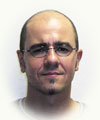
Blaise Bourdin
Associate Professor, Department of Mathematics
Adjunct Professor, Center for Computation & Technology
344 Lockett Hall
Louisiana State University
Baton Rouge, LA 70803
+1 225 578 1612
bourdin AT lsu DOT edu
http://www.math.lsu.edu/~bourdin
B. Bourdin graduated with a doctorate in applied mathematics from the Université Paris Nord (France). He held postdoctoral positions in the departments of mathematics and solid mechanics at the Technical University of Denmark (DTU), in the department of Mechanical Engineering at Caltech, and at the courant Institute of Mathematical Science at New York University before joining the department of Mathematics at LSU in 2002. His primary research interest lies in the analysis and numerical implementation of the variational approach to fracture. Throughout this work, he became increasingly involved in large scale high performance computing. In recent years, he became interested in the predictive understanding of reservoir stimulation for Enhanced Geothermal Systems, a clean and renewable source of energy. He is also involved in multiscale modeling for fracture. A question of particular interest is how macroscopic fracture properties can be derived from micro-geometry and microscopic properties in complex structures such as composite materials.

Dana Browne
Professor and Associate Chair
Dept. of Physics and Astronomy
Louisiana State University
Baton Rouge, LA 70803
+1 225 578 6843
browne AT phys DOT lsu DOT edu
http://www.phys.lsu.edu/faculty/browne/browne.html
BA: University of Virginia, 1975; MS: Stanford University, 1978; PhD: Stanford University, 1980.
Research Areas - (1) Electronic Structure of Materials (2) Collective properties of systems far from equilibrium
Collaborations within LA-SiGMA in the areas of properties of transition metal germanides and silicides in the B20 structure, and correlation effects in dilute magnetic semiconductors.
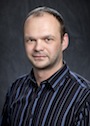
Michal Brylinski
Assistant Professor, Department of Chemistry and CCT
407 Choppin Hall
Louisiana State University
Baton Rouge, LA 70803-4001
+1 225 578 2791
michal AT brylinski.org
Research: http://brylinski.cct.lsu.edu/
PhD: Jagiellonian University, 2006
The major focus of our group is the design and development of novel tools for the modeling and analysis of biological networks using Computational Systems Biology. Briefly, Computational Systems Biology can be considered as a complex platform that integrates many algorithms from different research areas such as Structural Bioinformatics, Functional Genomics, Cheminformatics and Pharmacogenomics. We are interested in applying various Computational Systems Biology tools to study the evolution and organization of pathways into biological networks with the primary application in modern drug discovery and design. Biological pathways, which are the common units of biological networks, can be broadly defined as the series of interactions between molecular entities such as proteins, nucleic acids and small organic molecules that trigger a variety of cellular responses. Their malfunction can be often directly linked to many disease states. Our ambitious goal is to reveal the underlying principles of biological network evolution, organization and dynamics. By doing so, we hope to be able to predict the phenotypic outcome of biological network perturbations.

Les Butler
Role in LA-SiGMA: Experimentalist working on energy storage materials
Professor, Department of Chemistry
329 Choppin Hall
Louisiana State University
Baton Rouge, LA 70803-4001
+1 225 578 4416
lbutler AT lsu DOT edu
Research: http://web.me.com/lesbutler/research/home.html
Blog: http://web.me.com/lesbutler/research/Blog/Blog.htmlBS: University of Arkansas, 1977; PhD: University of Illinois, 1981; PostDoc: Caltech, 1981-83
We are developing new 3D imaging methods with chemical applications to materials science, polymers, environmental, geology, and selected biological projects. We built a tomography beamline at the LSU synchrotron, and are actively exploring other imaging methods, including neutron tomography and nanotomography with focused synchrotron X-ray beams.
We were drawn to tomography as a fast, high-information content spectroscopic tool for materials science. Our background includes over 20 years of solid-state NMR spectroscopy with numerous applications to materials, catalysis, and environmental projects. We even built five NMRs and performed some MRI-like experiments. However, the new appeal of tomography, especially the potential for high-throughput studies has changed our primary research tool.
Tomography can be done with X-rays, neutrons, electrons, etc. With X-rays, chemical sensitivity is based on scanning X-ray energies across elemental K-edges in a multi-spectral imaging experiment. The LSU synchrotron beamline makes this process easy, yielding images with near micron resolution. For example, many brominated flame retardant from a local chemical company have been studied based on the bromine K-edge.
The ability to measure chemical distributions in 3D has wide applications. We have demonstrated applications to environmental science. Very recently, we have performed neutron imaging studies of hydrogen storage materials and lithium-ion polymer batteries; both systems were imaged during operation.
We have enjoyed many collaborations and have co-hosted a couple of math workshops, with one U of Minnesota IMA workshop drawing over 120 participants. Still, we are seeking applied math collaborations willing to engage with many GB to TB data sets.
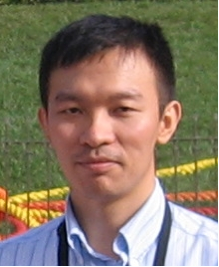
Bin Chen
Associate Professor, Department of Chemistry
441 Choppin Hall
Louisiana State University
Baton Rouge, LA 70803-4001
+1 225 578 4094
binchen AT lsu DOT edu
http://chemistry.lsu.edu/chen
Bin Chen received his B.S. in Chemistry with a minor in Computer Science from Peking University and a Ph.D. in Chemistry and M.S. in Computer Science from the University of Minnesota. Before joining the Louisiana State University in 2003, he did postdoctoral research at the Center for Molecular Modeling at the University of Pennsylvania. His research is directed towards understanding the relationships between microscopic structures/interactions and macroscopic properties for systems of chemical, biological, and environmental interest. His research tool is statistical mechanics based atomistic simulation. One of the greatest challenges for his area is the limited time and spatial scales that can be afforded using the current computer technology and simulation algorithms. The goals of his research are to greatly expand the territory accessible to molecular simulation by circumventing these constraints and to develop an atom-based approach that can be used as a practical tool to provide important molecular-level information for long time-scale events of chemical, biological, and environmental interest. This research direction is fueled by his recent development of an aggregation-volume-bias Monte Carlo based technique that led to a series of successful studies of rare nucleation events.
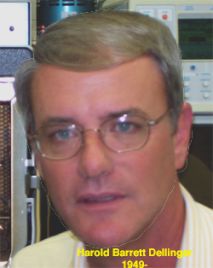
Barry Dellinger
Professor and Patrick F. Taylor Chair of the of Environmental Chemistry
Department of Chemistry
413 Choppin Hall
Louisiana State University
Baton Rouge, LA 70803-4001
+1 225 578 6759
barryd AT lsu DOT edu
http://chemistry.lsu.edu/site/People/Faculty
His research focuses on the formation of toxic combustion by-products, incineration of hazardous materials, combustion-generated nanoparticles, and environmentally persistent free radicals. Outgrowths of Dellinger's work include development of a zone model to assess pollutant formation in combustion systems, development of a ranking of hazardous waste incinerability, development of reaction kinetic models to explain formation of dioxins and other combustion-generated pollutants, and recognition that all combustion process may form the same types of environmentally persistent free radicals previously just attributed to cigarette smoke. His work is the basis of federal regulations regarding the burning of toxic wastes and other materials. He has served on the EPA Science Advisory Board and provides frequent input on current environmental concerns. His data are also used by industry to streamline production and waste-disposal systems, reducing their cost and environmental impact.

Ram Devireddy
LA-SiGMA Co-PI (Bio-Molecular Simulations and Experiments)
Associate Professor, Mechanical Engineering Department
Louisiana State University
Baton Rouge, LA 70803-4001
+1 225 578 5891
Fax: +1 225 578 5824
devireddy AT me DOT lsu DOT edu
http://me.lsu.edu/~devireddy/Dr. Ram Devireddy earned a Bachelor's degree in Mechanical Engineering from the University of Madras in 1993, followed by a Master of Science in the same field in 1995 from the University of Colorado at Boulder. Subsequently, he was awarded the Doctor of Philosophy degree in Mechanical Engineering from the University of Minnesota at Minneapolis in 1999. After spending a year as a Postdoctoral Fellow in the Department of Chemical Engineering and Materials Science at the University of Minnesota at Minneapolis, he joined the Louisiana State University, where he currently serve as a tenured faculty member in Mechanical Engineering. Dr. Devireddy is interested in a wide of variety of biological phenomena at low temperatures with particular emphasis on phase change phenomena. Current projects include molecular dynamic simulations of biomembranes in the presence of chemicals, biopreservation of uni and multi-dimensional adult stem cell sheets, rational design of ovarian tissue cryopreservation protocols, modeling of chemical transport processes in native and artificial tissues, conservation of endangered species using biopreservation techniques, laser-tissue interactions, and design, development and characterization of microfabricated thermal sensors and actuators for cryobiological applications. Dr. Devireddy has co-authored more than 60 journal papers and over 75 conference proceedings and meeting abstracts. He is also the recipient of several best paper awards including one from the Society of Cryobiology, another from the ASME Heat Transfer Division and another from Materials Research Society. Dr. Devireddy's research is (or was) supported by the Louisiana Board of Regents, the National Aeronautics and Space Administration (NASA), the National Institutes of Health (NIH), the National Science Foundation (NSF) and the Whitaker Foundation.

John DiTusa
Professor, Department of Physics & Astronomy
Louisiana State University
211-B Nicholson Hall, Tower Dr.
Baton Rouge, LA 70803-4001
+1 225 578 2606
ditusa AT phys DOT lsu DOT edu
http://www.phys.lsu.edu/newwebsite/people/ditusa.htmlDr. DiTusa obtained his PhD from Cornell University and his research interests are in the area of Experimental Condensed Matter Physics: Magnetic materials that can be manipulated with the same control as present day electronic materials based on silicon technology are required for future development of spintronics and spin-based version of quantum computing. Spintronics has been coined to refer to devices that make use of not only the charge properties of semiconductors and metals, as in today's transistor based devices, but also of the carriers spin (intrinsic angular momentum). We have focused our research on materials systems that may offer such control. This includes silicon based magnetic semiconductors, germanides, oxides, and sulfides where the carrier concentration and magnetic state can be controlled chemically or with external pressure. In addition, an understanding of the properties of these materials requires exploration of their low temperature properties. Since these materials are typically near metal-insulating and non-magnetic to magnetic phase transitions the physics of quantum phase transitions play a role in determining their low temperature properties.
My research interests include: Magnetic semiconductors, quantum critical behavior in low carrier density materials, magnetoresistive materials and mechanisms of magnetoresistance, and quantum spin systems such as one-dimensional antiferromagnets which can be carrier doped.

Jayne Garno
Experimentalist working with molecular-level measurements of charge transport properties in designed porphyrins
Associate Professor, Department of Chemistry
232 Choppin Hall
Louisiana State University
Baton Rouge, LA 70803-4001
+1 225 578 8942
jgarno AT lsu DOT edu
http://garnogroup.lsu.edu/Jayne Garno earned her PhD in chemistry at Wayne State University in Detroit. She received a Bachelor's degree in Biology at the University of Michigan, Ann Arbor and has a BS in Chemistry from Saginaw Valley State University. Her research applies scanning probe microscopy for molecular-level measurements and nanoscale imaging. Her research group is interested in studies which measure and model size-dependent changes in magnetic and electronic properties at the nanoscale.
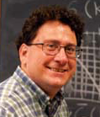
Mark Jarrell
LI Principal Investigator
Professor, Department of Physics & Astronomy and
Center for Computation & Technology
Louisiana State University
+1 225 578 7528
jarrellphysics AT gmail DOT com
http://www.phys.lsu.edu/~jarrellDr. Mark Jarrell earned his Ph.D. from the University of California at Santa Barbara in Physics. Dr. Jarrell's main area of interest lies in the physics of strongly correlated electronic materials, which include many nanostructures, high Tc superconductors, and heavy Fermion and magnetic materials.
I am looking for collaborators in applied math, computer science and engineering, who are interested in developing codes and addressing the problems (latency) of scaling codes to the next generation of hyperparallel or heterogeneous machines. I am also looking for collaborations in the development of interfaces that will make our codes accessible to a wider range of researchers, including experimentalists.
I am interested in forging new collaborations with experimentalists, computational scientists, and theorists working on complex emergent phenomena in correlated systems, especially (but not limited to) quantum criticality, higher density magnets, cold atoms in atomic traps, and spintronic devices. Of special interest are the new functionalities which come about from competing states of matter.
I am intersted in developing new formalism, algorithms and codes for the many time scales problem and for a wide class of inverse problems.

Rongying Jin
Professor, Department of Physics & Astronomy and
Louisiana State University
+1 225 578 0028
rjin AT lsu DOT edu
http://www.phys.lsu.edu/rongying/Dr. Jin earned her Ph.D. from ETH (Swiss Federal Institute of Technology, Zurich) in 1997. Dr. Jin's research focuses on the development of novel complex materials with intriguing physical properties, such as new phases that exist on the edge of instabilities (unconventional superconductivity, quantum critical phenomena, heavy-Fermion behavior, thermoelectricity etc.). Thus, her research effort is devoted to (1) "science-driven" synthesis and (2) investigation of basic physical properties (charge, spin and heat transport, magnetization, specific heat etc.).

Bijaya Karki
Chair and Associate Professor, Division of Computer Science and Engineering, School of Electrical Engineering and Computer Science
3127 Patrick Taylor Hall
Louisiana State University
Baton Rouge, LA 70803
+1 225 578 1252-Voice
+1 225 578 1465-Fax
karki AT csc DOT lsu DOT edu
http://csc.lsu.edu/~karki/
I am currently Chair and Associate Professor of Computer Science and Engineering Division in School of Electrical Engineering and Computer Science. I received my doctorate in 1997 from the University of Edinburgh, Edinburgh, UK. Before joining the Department in 2003, I worked as a research scholar at the University of Minnesota. I was awarded National Science Foudation CAREER grant in 2004. I won LSU Phi Kappa Phi and College of Science awards in 2008, and LSU Rainmakers award in 2010. I received JMGM graphics prize in 2009 and JSPS fellowship in 2012. My research projects involve the development and application of a metacomputing-visualization framework to address fundamental materials problems for key geophysical implications.
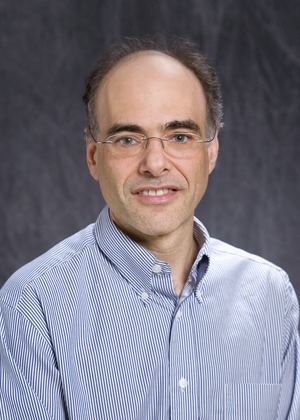
David M. Koppelman
Associate Professor, Division of Electrical and Computer Engineering
3191 Patrick Taylor Hall
Louisiana State University
Baton Rouge, LA 70803
+1 225 578 5482-Voice
+1 225 578 5200-Fax
koppwl AT ece DOT lsu DOT edu
http://www.ece.lsu.edu/koppel/index.html
Ph.D., Rensselaer Polytechnic Institute, 1988 Advanced computer architectures, multiprocessors, interconnection networks.

Revati Kumar
Assistant Professor of Chemistry and
Center for Computation & Technology
736 Choppin Hall
Louisiana State University
Baton Rouge, LA 70803
+1 225 578 0907
revatik AT lsu DOT edu
http://sites01.lsu.edu/faculty/revatik/
Ph.D., Theoretical/Computational Chemistry, University of Wisconsin-Madison; MsC. Chemistry, Bangalore University; BsC. Physics, Mount Carmel College
Dr. Kumar's current research interests include the study of the hydroxide anion at the air-water interface, Modeling of the electrolyte in Li-ion battery systems (Collaboration with Dr. Jan Abraham's group at Argonne National Laboratory), and Atomistic modeling of electrochemical processes in systems with inter-electrode distances in the nanometer regime.
Dr. Kumar will join the LSU faculty in the fall, and research the development of atomistic reactive models to study chemical reactions in a wide range of systems, from electrolytes in energy storage materials (e.g. Li-air batteries) to novel materials (e.g. catalysis in metal organic frameworks). Other interests include the study of aqueous interfaces and nanoconfined environments such as reverse micelles.

Richard L. Kurtz
Interim Director, CAMD
Associate Dean, College of Science
Professor, Department of Physics and Astronomy
Louisiana State University
Baton Rouge, LA 70803
+1 225 578 8859 - College
+1 225 578 4029 - Physics
+1 225 578 8825 - Fax
rlkurtz AT lsu DOT edu
http://surfaces.phys.lsu.edu
Ph.D., Applied Physics, Yale University, May, 1983; B.A., Physics, Brandeis University, June, 1978
Fellow, AVS, Science and Technology of Materials, Interfaces, and Processing 2010
Distinguished Faculty Award - Louisiana State University, 2007
Harding Bliss Award - Yale University, May, 1983
My research interests are focused on the application of synchrotron radiation to study single-crystal and thin-film surfaces. These techniques can be profitably applied to many different materials of fundamental scientific and technological interest, ranging reduced-dimensional materials, highly correlated materials, nanocluster catalysts, and interfaces.
There are a number of surface-sensitive experimental techniques that I am interested in implementing that use synchrotron radiation. The primary technique is photoelectron spectroscopy. This has been an invaluable tool in studies of the electronic structure of superconductors and is now playing a similar role in studies of highly correlated materials. Using these techniques, one can map out band structures, obtain information on chemical configurations, bond morphologies, etc. A number of other spectroscopies and scanned-probe techniques (STM, AFM) are used in conjunction with photoemission, including photoelectron diffraction, near-edge absorption measurements, and studies to give complementary electronic and geometric structural information.
I am interested in collaborations involving the determination of electronic structure of materials as well as the surface chemistry and interactions of molecules, nanoclusters, and thin-films on surfaces.
Robert Lipton
S.B. Barton Professor, Department of Mathematics
Adjunct Professor, Center for Computation & Technology
384 Lockett Hall
Louisiana State University
Baton Rouge, LA 70803
+1 225 578 1569
lipton AT lsu DOT edu
http://www.math.lsu.edu/~lipton
R. Lipton received his Ph.D. in Mathematics from NYU in 1986. He did postdoctoral work at the Mathematical Sciences Institute at Cornell University from 1986-1988 and was a C. B. Morrey Assistant Professor at U.C. Berkeley 1988-1990. He served on the Mathematical Sciences Faculty at WPI from 1990-2001. My current interest lies in developing dimension reduction schemes for modeling physical processes across multiple length scales. A second research direction seeks to characterize macroscopic behavior of random media with bulk and surface transport processes occurring at small length scales. A third effort focuses on design of meta-materials with novel optical properties.

Kenneth Lopata
Assistant Professor, Department of Chemistry and Center for Computation & Technology
742 Choppin Hall
Louisiana State University
Baton Rouge, LA 70803
+1 225-578-2063
Fax: 225-578-3458
klopata AT lsu.edu
http://chem-faculty.lsu.edu/lopata/home.htmlPh.D., Physical Chemistry, University of California, Los Angeles; B.S., Chemical Physics, University of Toronto
Dr. Lopata uses time-domain quantum chemistry simulations to shed light on the fundamental mechanisms underlying femtosecond excited state dynamics in molecules and materials. Predictive, first-principles virtual "experiments" of this kind offer the unique ability to directly visualize electronic and nuclear motion at their natural length and time scales. This not only opens new avenues in interpreting cutting-edge time-resolved experiments, but also motivates new directions in simulation-guided design of photocatalysis and energy materials. Of particular interest are chromophore dynamics at interfaces, charge dynamics in nanosystems, and strong-field/multi-photon processes. His efforts span theory/methodology development, high performance (parallel) computing, and predictive modeling.
Dorel Moldovan
Associate Professor, Department of Mechanical Engineering
2504 Patrick Taylor Hall
Louisiana State University
Baton Rouge, LA 70803
Phone: +1 (225) 578-6488
Fax: +1 (225) 578-5924
dmoldo1 AT lsu DOT edu
Dr. Dorel Moldovan obtained his Ph.D. from West Virginia University in Physics. Dr. Moldovan's research interests include condensed matter and materials physics focusing on various surface and interfacial phenomena such as elastic instabilities in membranes and polymers, and on microstructure evolution and thermal stability of nanocrystalline materials. Using atomistic and mesoscale simulations his recent research focuses on the development of fundamental understanding of large scale behavior of various biopolymers and lipid structures based on the interactions between atoms.
As a member of LA-SiGMA project Dr. Moldovan will explore, using atomistic and coarse grained simulations, the assembly and the interaction with lipid bilayers of various self-assembled drug delivery vehicles. In addition, he will contribute to other computational tasks such as the development of all-atom and coarse grained force field for biomaterials and the development of hybrid MD/continuum formalisms for simulation of bimolecular systems and their implementation into LAMMPS.

Juana Moreno
Assistant Professor, Department of Physics and Astronomy & Center for Computation and Technology
202 Nicholson Hall
Louisiana State University
Baton Rouge, LA 70803
Phone: +1 (225) 578-7586
moreno AT phys DOT lsu DOT edu
http://www.phys.lsu.edu/newwebsite/people/moreno.htmlJuana Moreno received her B.S. in Physics from the Universidad Autonoma in Madrid, Spain; her Ph.D. from Rutgers University in New Jersey on the theory of Heavy Fermions. She did a postdoc in Trieste, Italy as well as at Northwestern University, Illinois. She worked as Research Associate at Clemson University, South Carolina and University of Cincinnati, Ohio. She was also an Assistant Professor at the University of North Dakota in the Department of Physics before joining Louisiana State University.
Juana Moreno's research focusses on the computational modeling of the transport and magnetic properties of correlated electron systems, including diluted magnetic semiconductors, heavy fermion compounds and low-dimensional systems. These materials share in common unexpected properties which can not been explained with conventional approaches. She have used a variety of computational tools, such as the dynamical mean-field theory and the dynamical cluster approximation in the study of diluted magnetic semiconductors and the density matrix renormalization group method in the area of low-dimensional materials. In the near future, she plans to extend these investigations to nanoscale quantum dots and heterostructures of magnetic semiconductors, where the confined geometry plays a crucial role, to incorporate orbital degrees of freedom in the modeling of heavy-fermions and cuprates, to calculate transport properties in nano systems and to simulate complex materials quantitatively using parameters extracted from first principles calculations.
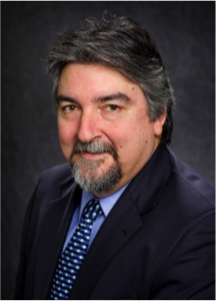
Dimitris Nikitopoulos
La-SiGMA Investigator in the Bio-Materials Science Driver
Alexis and Marguerite Voorhies Endowed Professor
Richard J. and Katherine J. Juneau Distinguished Professor and Chair
Mechanical Engineering Department
Louisiana State University
Baton Rouge, LA 70803
Phone: +1 (225) 578-5903
Fax: +1 (225) 578-5924
medimi AT lsu DOT edu
Dr. Dimitris Nikitopoulos obtained his Ph.D. from Brown University in Engineering (Major in Fluid Mechanics, Minors in Thermodynamics and Applied Mathematics). Dr. Nikitopoulos' research interests include BioMEMS, coupled computational fluid dynamics and molecular dynamics for multi-scale systems, micro-fluidics and design, flows on the nanoscale, turbulent dispersed flows, micro-scale two-phase flows, two-phase flows with phase change, laser-based diagnostics, flow control and mixing, internal turbine blade cooling, film-cooling, gas-turbine technology, and flow transients.
As a member of LA-SiGMA project, Dr. Nikitopoulos will collaborate with individuals in the areas of Computer Science and Computational Chemistry for high performance computing support for large scale computations involving scale-bridging models from molecular to continuum levels of bio-material systems (MD/CFD Hybrid codes based on LAMMPS and porting into new HPC architectures) and the development of molecular interaction models for bio-materials (e.g. interaction of DNA mono-nucleotides, proteins with man-made and/or tissue materials).
Lu Peng
Associate Professor, Electrical and Computer Engineering Department
102 South Campus Drive
Electrical Engineering Bldg.
Louisiana State University
Baton Rouge, LA 70803
Phone: +1 (225) 578-5535
Fax: +1 (225) 578-5200
lpeng AT lsu DOT edu
http://www.ece.lsu.edu/lpeng/wordpress/I received the Bachelor and Master degrees in Computer Science & Engineering from Shanghai Jiaotong University, China. After that, I obtained the Ph.D. degree in Computer Engineering from the University of Florida in Gainesville in Spring 2005. I joined the Electrical and Computer Engineering department at Louisiana State University in August 2005. My research focuses on computer architecture, memory hierarchy system, reliability, power efficiency and other issues in CPU design. I also have interests in Network Processors. I received an ORAU Ralph E. Powe Junior Faculty Enhancement Awards in 2007 and a Best Paper Award from IEEE International Conference on Computer Design (processor architecture track) in 2001.
Ward Plummer
Professor, Department of Physics & Astronomy
Louisiana State University
229-C Nicholson Hall, Tower Dr.
Baton Rouge, LA 70803-4001
+1 225 578 3300
wplummer AT phys DOT lsu DOT edu
http://www.phys.lsu.edu/newwebsite/people/plummer.htmlE. Ward Plummer came to LSU in 2009 as part of the Multidisciplinary Hiring Initiative in Materials Science and Engineering. He is a professor of Physics and Astronomy and special assistant to the Vice Chancellor for Research. He received a Bachelor of Arts degree from Lewis and Clark College in 1962 and completed his Ph.D. degree in physics at Cornell University in 1967, working with Prof. Thor Rhodin. His thesis work on atomic binding of 5-d transition-metal atoms using FIM led to him receiving the Wayne Nottingham Prize at the Annual Physical Electronics Conference of the American Physical Society in March 1968.
Dr. Plummer's research interests are in the area of Experimental Condensed Matter and Materials Physics: Investigations of the phenomena associated with the unique environment at a surface or interface driven by broken symmetry and reduced dimensionality. Specifically of primary interest is the coupling of the electronic, magnetic, and structural properties (static and dynamic) at a surface.
This general theme is being applied by us to study correlated electron matierials (CEMs) with functionalities like high-Tc superconductivity in cuprates, "colossal" magnetoresistance (CMR) in manganites, and superconductivity in the new FeAs based superconductors. The exotic behavior of CEMs is intimately related to the coexistence of competing nearly degenerate states which couple simultaneously active degrees of freedom, charge, lattice, orbital, and spin states. Our approach is to investigate and hopefully learn how to tune the functionality in these materials by using the manifestations of broken symmetry, reduced dimensionality and spatial confinement.

J. (Ram) Ramanujam
John E. and Beatrice L. Ritter Distinguished Professor of Electrical Engineering
Louisiana State University
102 Electrical Engineering Building
Baton Rouge, LA 70803
Phone: +1 225 578 5628
Fax: +1 225 578 5200
jxr AT ece DOT lsu DOT edu
http://www.ece.lsu.edu/jxr/jxr.htmlDr. Ramanujam is the John E. and Beatrice L. Ritter Distinguished Professor in the LSU department of electrical and computer engineering. His research interests include compiler optimizations for high-performance computing, computational science, computer architecture, embedded systems, and hardware synthesis and optimization. He received the National Science Foundation's Young Investigator Award in 1994. In addition, he has received the best paper awards at the 2003 International Conference on High Performance Computing (HiPC 2003) and the 2004 International Parallel and Distributed Processing Symposium (IPDPS 2004) for his work with others on compiler optimizations for quantum chemistry computations.

Cristina Sabliov
Role in LA-SiGMA: Experimentalist focused on biointeraction of nanostructures with the GI tract
Associate Professor, LSU AgCenter
Biological and Agricultural Engineering Department
Louisiana State University
141 E. B. Doran Bldg
Baton Rouge, LA 70803
+1 225 578 1055
csabliov AT lsu DOT edu
http://www.lsuagcenter.com/Cristina M. Sabliov joined the Biological and Agricultural Engineering (BAE) Department at Louisiana State University Agricultural Center in October of 2003. She is a graduate of North Carolina State University holding a double-major Ph.D. in Food Science and Biological and Agricultural Engineering (2002), and a M.S. in Chemical Engineering (2001). During her tenure at LSU, Dr. Sabliov quickly developed an expertise in the field of nanotechnology, specifically on polymeric nanoparticles designed for delivery of bioactive components for improved human health. During the past five years, her research was supported by federal (USDA, NSF, ACS, NOAA) and state (LA-BOR, SBB, RRB, ASCL) agencies. Her research was published in reputable journals such as Journal of Nanoscience and Nanotechnology, Journal of Food Engineering, Journal of Biomaterial Science-Polymer Edition, Nanotechnology, Bioresource Technology, and Journal of Physical Chemistry. Dr. Sabliov co-authored a chapter on Encapsulation and Controlled Release of Antioxidants and Vitamins via Polymeric Nanoparticles published in Controlled Release Technologies for Targeted Nutrition. She organized several IFT and AIChE sessions on the topic of Nanotechnology and Food, and served as the 2007-2008 chair of the ad-hoc committee on nanotechnology associated with the NC1023 group, Improvement of Thermal and Alternative Processes for Foods. Dr. Sabliov is determined to contribute significantly to the application of nanotechnology to foods by conducting high quality research, teaching and training students in this field. She is interested in collaborating with physicists and engineers trained in MD simulations to develop an understanding of the interaction between polymeric nanoparticles ingested orally and the gastrointestinal tract. This understanding is critically needed to advance the field of bio-nanointeraction of interest to both food and drug industries.
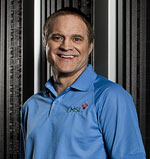
William Shelton
Professor Cain Department of Chemical Engineering and
Center for Computation & Technology
320 ChE Building
Louisiana State University
Baton Rouge, LA 70803
Phone: 225-578-1426
wshelton AT lsu DOT edu
http://www.che.lsu.edu/people/faculty/facstaff/william.sheltoncd
Ph.D., Theoretical Condensed Matter Physics, University of Cincinnati; B.S. Physics, University of Cincinnati
Dr. Shelton began his career in 1990 as National Academy of Sciences/National Research Council Postdoctoral fellow in the Complex Systems Theory Group at the Naval Research Laboratory. He then joined Oak Ridge National Laboratory as a staff scientist in 1992. Dr. Shelton was a group leader of the Computational Condensed Matter Physics group until 2001 and a Distinguished Senior Research Staff member of the Computational Chemical Sciences group prior to coming to EMSL in September 2010. He also spent a year during his Ph.D. studies at the University of Bristol in Bristol, England working with Professor B. Gyorffy.
Dr. Shelton is nationally recognized for his contributions in the field of computational materials and chemical sciences where he has developed methods for application on massively parallel architectures. The main body of his work is in the general areas of alloy theory and surface science where he has worked on incorporating magnetic and chemical disorder including point defects, such as vacancies and antisites in both materials and chemistry. Most of Dr. Shelton's work has been in collaboration with many experimental groups where the iteration between theory and experiment has lead to interesting insights in several areas of research. Dr. Shelton has authored over a hundred peer-reviewed papers and he has been an invited speaker at national and international meetings.
In addition, Dr. Shelton has won several high performance computing awards including 3 Gordon Bell Awards, a Computerworld Smithsonian Award and 3 Supercomputing High Perfornance Computing Challenge Awards.
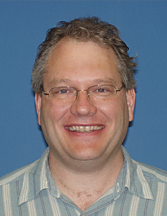
Phillip Sprunger
Professor, Department of Physics & Astronomy
Louisiana State University
217-B Nicholson Hall, Tower Dr.
Baton Rouge, LA 70803
+1 225 578 1254
phils AT lsu DOT edu
http://www.phys.lsu.edu/newwebsite/people/sprunger.htmlOur research group is focused on understanding interconnecting atomic/morphological, electronic/magnetic and chemical/chemisorption properties of various surface/thin-film/nanophase systems using complementary experimental probes. This includes employing synchrotron-based-VUV photoemission (high-resolution and spin-resolved), -IR spectromicroscopy, -x-ray absorption, along with electron energy-loss spectroscopy, and variable-temperature scanning tunneling microscopy and atomic force microscopy. Systems that are currently being investigated include heteroepitaxially grown metal-on-metal (e.g. Ag/Cu, Co/Ag, Ag nanowires/Cu) and metal-on-semiconductor systems (e.g. Ag/GaAs, Be/Si), intermetallic alloy thin-film and surface systems (e.g. FeAl), simple and complex adsorbate and biological overlayers (amino acid/polymers/SiO 2 and Au), polymer photo-induced degradation, and metal on metal-oxide nano-structures (e.g. Ag/Al2/O3/FeAl). Research emphasis is on correlating electronic/magnetic/photonic properties (hybridization, band-structure electron-phonon, electron-electron interactions) with atomic structure (STM, AFM, LEED, SEXAFS).
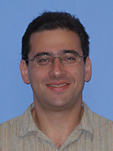
Ilya Vekhter
Associate Professor
Department of Physics & Astronomy
Louisiana State University
210-E Nicholson Hall, Tower Dr.
Baton Rouge, LA 70803
+1 225 578 0598
vekhter AT phys DOT lsu DOT edu
http://www.phys.lsu.edu/faculty/vekhterIn my research I analyze the consequences of unusual orders on the experimentally measured quantities, use the experimental data to draw conclusions about the origin of the unconventional properties of strongly interacting electron systems, and investigate theoretical models for emergence of different types of exotic orders, their competition and coexistence. I am especially interested in the unconventional superconductivity in high-temperature copper oxide superconductors and heavy fermion materials and interplay of superconductivity and itinerant magnetism in these systems. I am also investigating the properties of materials near the Quantum Critical Points: points where a phase transition between two different ground states occurs at T=0 and and is accompanied by quantum mechanical fluctuations.
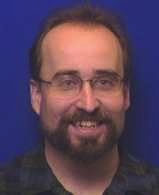
Clint Whaley
Associate Professor of Computer Science
3115 Patrick Taylor Hall
Computer Science and Engineering Division
Louisiana State University
Baton Rouge, LA 70803
+1 225 578 0235
rcwhaley AT lsu DOT edu
http://www.csc.lsu.edu/~whaley/My research interests include: high performance computing, empirical optimization, backend compiler optimization, parallel computing, scientific computing, and computer architecture
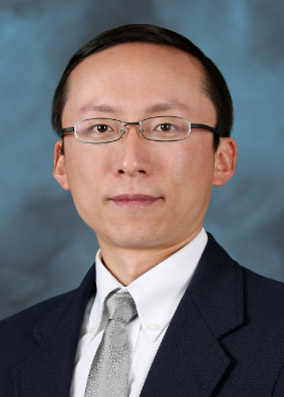
Ye Xu
Assistant Professor, Cain Department of Chemical Engineering
322 ChE Building
Louisiana State University
Baton Rouge, LA 70803
+1 225 578 1750
yexu AT lsu DOT edu
http://www.che.lsu.edu/people/faculty/facstaff/ye.xuDr. Xu's research interests include: theoretical and computational modeling of interfacial chemical thermodynamics and kinetics, reaction mechanisms; computational heterogeneous catalysis and electrocatalysis; oxide surface chemistry and oxidation reactions; selective conversion of organics and hydrogenation reactions; and in silico design of catalytic materials.
-
-
Grambling State University
-
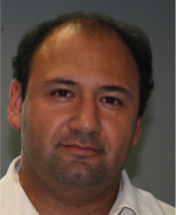
Pedro Derosa
Role at LA-Sigma: Senior Researcher, GSU Campus PI, EEWD committee co-chair, member of the PET committee
Associate Professor, Larson Professor
Louisiana Tech University (Physics and IfM) and Grambling State
+1 318 257 5139
pderosa AT latech DOT edu
http://www2.latech.edu/~pderosaEducation: Ph.D. in Physics - 1997, National University of Córdoba-Faculty of Mathematics, Astronomy and Physics, Dept. of Physics - Córdoba, Argentina.
Research Interests: I was involved as a postdoc in a number of topics from Li-ion batteries to Molecular Electronics. Electronic transport in materials is where I feel more confortable. In my group we currently are involved in the multiscale modeling of organic conductors and nanocomposites where a hopping model is used to describe conductivity but parameters necessary at this scale are obtained from calculations at smaller scales. We also have interest in the study of diffusion at the nanoscale, particularly molecular diffusion in nanotubes where Monte Carlo is used to study the diffusion of particles in nanotubes and nanopores with main applications are molecules and nanoparticle delivery.
Collaboration Interest: I am seeking collaboration with theoreticians with much deeper knowledge in the development and implementation of molecular models (DFT, ab initio, green functions) than I have. On the other hand I would like to also collaborate with experimentalist conducting research in my areas of expertise for validation and calibration of models and for applications to novel systems.
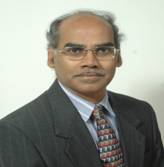
Naidu V. Seetala
Professor of Physics
Grambling State University
+1 318 274 2574
naidusv AT gram DOT edu
http://www.gram.edu/Dr. Seetala received the doctorate in Physics from the Saha Institute of Nuclear Physics, Calcutta University, India. He served as a research fellow for three years at the Saha Institute of Nuclear Physics. Prior to joining the Grambling community he was a Post-Doctoral Research Associate and Lecturer at the University of Texas at Arlington. He also served as visiting faculty at Argonne National Laboratory, and MINT center, University of Alabama at Tuscaloosa, and as an adjunct professor at Louisiana Tech University. He has studied radiation induced defects in metals and is currently actively involved in nanoscience. Dr. Seetala has worked diligently to strengthen experimental physics at Grambling State University. He established state of the art research facilities at GSU including Positron Annihilation, Magneto-sputter thin film coater, vibrating sample magnetometer, SQUID magnetometer, SEM with EDXS, and Mossbauer spectroscopy.
-
-
Louisiana Tech University
-

Thomas Bishop
Scientific Investigator
Research Associate Professor, Center for Computational Sciences
Adjunct Associate Professor, Department of Biochemistry
+1 504 862 3370
bishop AT latech.edu
http://dna.ccs.tulane.eduDr. Tom Bishop is a Computational Molecular Biologist. His primary research interests are the structure and dynamics of DNA and chromatin and how they relate to genetic function and disfunction (e.g. transcription, regulation, replication and repair). He studies molecular events in the hormone response mechanism as a model system for this research. He has developed a multiscale model of chromatin that bridges between atomic and continuum scales.

Weizhong Dai
LA-SiGMA Senior Investigator
Professor and McDermott International Professor
Program in Mathematics and Statistics
College of Engineering and Science
Ruston, LA 71272
+1 318 257 3301
dai AT coes DOT latech DOT edu
http://www.latech.edu/~dai/Dr. Weizhong Dai received his Ph.D. degree in Applied Mathematical and Computational Sciences from the University of Iowa in 1994. His research interests include numerical solutions of partial differential equations, numerical micro heat transfer and bioheat transfer, computational fluid dynamics, numerical simulations for bioeffect of electromagnetics, and numerical methods for microfabrication systems, such as laser chemical vapor deposition (LCVD), melt crystallization, and x-ray lithography.
Sumeet Dua
Upchurch Endowed Professor
Associate Professor and Graduate Coordinator of Computer Science
Coordinator of IT Research, College of Engineering and Science
Director, Data Mining Research Laboratory
Louisiana Tech University
+1 318 257 2830
sdua AT coes DOT latech DOT edu
http://dmrl.latech.edu/Dr. Sumeet Dua's reseach focus is data mining for biological systems, and the development of fast and accurate computer algorithms for the automated recognition, identification, classification and tracking of targets of interest.
Pedro Derosa
Role at LA-Sigma: Senior Researcher, Grambling Representative on the EEWD committee, member of the PET committee
Associate Professor, Larson Professor
Louisiana Tech University (Physics and IfM) and Grambling State
+1 318 257 5139
pderosa AT latech DOT edu
http://www2.latech.edu/~pderosaEducation: Ph.D. in Physics - 1997, National University of Córdoba-Faculty of Mathematics, Astronomy and Physics, Dept. of Physics - Córdoba, Argentina.
Research Interests: I was involved as a postdoc in a number of topics from Li-ion batteries to Molecular Electronics. Electronic transport in materials is where I feel more confortable. In my group we currently are involved in the multiscale modeling of organic conductors and nanocomposites where a hopping model is used to describe conductivity but parameters necessary at this scale are obtained from calculations at smaller scales. We also have interest in the study of diffusion at the nanoscale, particularly molecular diffusion in nanotubes where Monte Carlo is used to study the diffusion of particles in nanotubes and nanopores with main applications are molecules and nanoparticle delivery.
Collaboration Interest: I am seeking collaboration with theoreticians with much deeper knowledge in the development and implementation of molecular models (DFT, ab initio, green functions) than I have. On the other hand I would like to also collaborate with experimentalist conducting research in my areas of expertise for validation and calibration of models and for applications to novel systems.
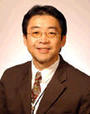
Chokchai "Box" Leangsuksun
Associate Professor of Computer Science
The SWEPCO Endowed Professor*
Center for Entrepreneurship and Information Technology
Louisiana Tech University
P.O. box 10348
Ruston, LA, 71272
Phone: 318-257-3291y
box AT latech DOT edu
http://www2.latech.edu/~box/Dr. Chokchai "Box" Leangsuksun received the Ph.D. and M.S. in computer science from Kent State University, Kent, Ohio in 1989 and 1995 respectively. His research interests include highly reliable and high performance computing, intelligent component based software engineering, parallel & distributed computing service-oriented architecture, and service engineering and management.

Yuri Lvov
Professor, Institute for Micromanufacturing
Louisiana Tech University
+1 318 257 5144
ylvov AT latech DOT edu
http://www2.latech.edu/~ylvov/Dr. Yuri Lvov received his Ph.D. in physical chemistry from Moscow State University in 1979. He has been a researcher at internationally known research institutions, including the Max Planck Institute for Colloids and Interfaces in Germany, the Naval Research Laboratory, in Washington, D.C. Since 1999 he has been with Louisiana Tech University, where he has been associated with the Institute for Micromanufacturing, and a faculty affiliated with the Physics and Biomedical Engineering Programs. He is an expert in the area of nanotechnology, and has carried out pioneering work in the development and applications of the layer-by-layer nanoassembly technique.

Daniela Mainardi
Louisiana Tech representative on the LA-SiGMA EEWD Committee, and senior researcher for the "Thermodynamics and Kinetics in H2 Storage Systems" (Science driver 2, focus 2)
Associate Professor, Chemical Engineering and Nanosystems Engineering
Louisiana Tech University
911 Hergot Ave. Ruston, LA 71272
+1 318 257 5126
Fax: +1 318 257 5104
mainardi AT latech DOT edu
http://www2.latech.edu/~mainardiDaniela Mainardi is an Associate Professor and Program Chair of Chemical Engineering at Louisiana Tech University; currently holding the Thomas C. & Nelda M. Jeffery Professorship in Chemical Engineering. Daniela Mainardi, is specialized in multi-scale modeling of thermodynamics, kinetics and transport processes at the nano-scale. She has a B.S. in Physics, a M.S. in Materials Science and Engineering, and a Ph.D. in Chemical Engineering.
Mainardi has extensive experience in a large variety of multi-scale molecular simulation tools and has conducted research on different and complementary nano- and bio-technology-related topics with applications to transport and catalysis. Mainardi has received the NSF-CAREER award in 2005 on Modified-Methanol Dehydrogenase Enzymatic Catalysts For Fuel Cell Devices. Mainardi is a senior member of the American Institute of Chemical Engineers (AIChE) and the current AIChE Transport and Energy Processes Division Chair.
The Mainardi research group uses a theory-guided computational approach to get insight into critical areas in Nano/Bio- technology for energy applications, particularly related to fuel oxidation in chemical and bio-chemical fuel cells, Fischer- Tropsch reactions for fuel production, and catalysts for NOx and O2 gas exhaust sensors.

Erica Murray
Research Assistant Professor
Institute for Micromanufacturing
Louisiana Tech University
+1 318 257 5148
emurray AT latech DOT edu
http://www.latech.edu/ifm/Dr. Erica Murray's research interests are electroceramic materials, gas sensors and solid oxide fuel cells. She also has expertise in fostering university and industry research partnerships.

Ramu Ramachandran
Co-PI; Evaluation & Assessment Leader; Member of CTCI and Energy Materials teams
Professor of Chemistry, Associate Dean for Research
College of Engineering and Science
Louisiana Tech University
P.O. Box 10348, Tech Station, Ruston, LA 71272
+1 318 257 4304
ramu AT latech DOT edu
http://www.chem.latech.edu/~ramuI received my Bachelor's degree in Chemistry from University of Calicut in South India, my M.Sc. in Chemistry from the Indian Institute of Technology in Madras (Chennai), and PhD in Physical Chemistry from Kansas State University, Manhattan, KS.
I have spent a large part of my career studying the reaction dynamics of gas phase atom + molecule systems using quantum mechanical and quasiclassical trajectory methods, mainly using potential surfaces calculated and fitted by ourselves. More recently, my work has focused on the mechanisms and pathways of various reactions of organolithium compounds and the influence of aggregation states and solvents on their reactivity. My current projects include the study of calix crown molecules as potential scavengers of radioactive metal ions from aqueous media (collaboration with Pedro Derosa) and the reaction mechanisms of organomercury compounds (specifically methylmercury and dimethyl mercury) in the gas phase and in aqueous media (collaboration with Don Haynie at U. of Southern Florida). For the LA-SiGMA project, I will be collaborating with Collin Wick (La Tech) and David Mobley (UNO) to generate transferable reactive force fields with polarization and environment dependent charges for studying catalytic processes on metal oxides. We will be interested in collaborating with experts in using VASP, CASTEP, and CP2K. I am also interested in becoming more proficient with MD methods applied to large systems.
Upali Siriwardane
Thelma Shipp Stewart Professor of Chemistry
P.O. Box 10348 T.S.
Carson Taylor Hall
Room 311
Louisiana Tech University
Ruston, LA 71272
+1 318 257 4941
upali AT chem DOT latech DOT edu
http://www.chem.latech.edu/~upaliDr. Upali Siriwardane received his B.S. degree at the University of Sri Lanka, Sri Lanka, in 1976, M.S. degree at the Concordia University, Montreal, Quebec, Canada in 1981, and Ph.D. degree at the Ohio State University, Columbus, Ohio, U.S.A in 1985. Dr. Siriwardane's research is concerned with the synthesis and characterization of inorganic and organometallic materials. Currently, the areas of interest to him include, preparation group 14 (Si,Ge, Sn) pyrrolides and porphyrins, preparation of novel zeolite, preparation of thin metal films, and the development of single crystal and powder X-ray diffraction techniques for material characterizations. A variety of methods are employed to prepare the pyrrolides, porphyrins and zeolites for study, including vacuum line and inert atmosphere synthesis, sol-gel chemistry, aqueous and non-aqueous hydrothermal routes. Techniques, such as multinuclear NMR, IR, and UV spectroscopy, and both single and powder X-ray diffraction, are used for the identification and structural characterization of the compounds produced. The information obtained from such structural studies can be used to aid our understanding of a materials properties. Dr.Siriwardane's teaching interests are in General Chemistry, Inorganic Chemistry, and Materials Chemistry courses. Currently, he is using inquiry-based teaching and developing Web and video resources for students.

Collin Wick
Materials Scientific Investigator
Assistant Professor, Department of Chemistry
Louisiana Tech University
600 W Arizona, Ruston, LA 71270
+1 318 257 2345
cwick AT latech DOT edu
http://www.latech.edu/~cwickCollin Wick received his PhD from the University of Minnesota. His research focuses on using molecular simulation to understand the properties of different interfaces. Some of his areas of expertise include the development of molecular models and force fields, including ones with many-body interactions, and also ones that allow for reactivity. Furthermore, he has experience in calculating free energy differences and kinetic properties for processes at interfaces, calculating phase equilibria, and properties of high molecular weight polymers. The computational methods Collin Wick has expertise is in using Monte Carlo, molecular dynamics, Langevin dynamics, and ab initio cluster calculations.
-
-
Southern University at Baton Rouge
-

Diola Bagayoko
LA-SiGMA Principal Investigator at Southern University and A&M College in Baton Rouge (SUBR)
Computational Physicist in the area of ab-initio, predictive calculations of electronic and related properties of materials (atoms, molecules, nanostructures, semiconductors, etc.).
Southern University System Distinguished Professor of Physics, Department of Physics
Southern University and A&M College
P. O. Box 11776 or Room 232/241 W. James Hall
Baton Rouge, LA 70813
Phone: +1 225 771 2730/3180 or 225-771-4130
Bagayoko AT aol DOT com
http://www.phys.subr.edu/PhysicsCurrent/faculty/bagayoko/
Dr. Bagayoko is a fellow of the National Society of Black Physicists (NSBP), he earned the BS degree in Physics and Chemistry from the Ecole Normale Supérieure (ENSup) of Bamako, Mali, the MS in Physics from Lehigh University, Bethlehem, Pennsylvania, and the Ph.D. in condensed matter theory from Louisiana State University (LSU), under the supervision of the late Boyd Professor Joseph Callaway. Highly interested in collaborations on ab-initio, predictive calculations of properties of materials, with emphasis on nanostructures, semiconductors, and novel materials (bi-, ter- and quaternary systems, biomaterials, etc.). Equally interested in exchanges with experimentalists in the search for novel materials. Details on selected publications are available at the "publications" hot link at the end of the web page listed above. Key publication that explains the self-consistent solution of the system of equations that defines Density Functional Theory (DFT): Comment on "Band gap bowing and electron localization of GaXIn1-XN" [J. Appl. Phys., vol. 100, page 093717 (2006)]. D. Bagayoko, L. Franklin, G. L. Zhao, and H. Jin, J. Appl. Phys. 103, 096101 (2008). http://jap.aip.org/resource/1/japiau/v103/i9/p096101_s1. This publication is available to the public, free for charge.

Lawrence L. Henry
Professor, Department of Physics
Office: Rm 111E
Research Lab: Electronic Transport and Magnetic Properties of Materials. Rm 111D
William James Hall
Southern University and A&M College
Baton Rouge, LA 70813
Faculty Advisor: SPS and SUARC
Phone: +1 225 771 4490
Fax: +1 225 771 2310
henry234 AT cox DOT net
http://phys.subr.edu/PhysicsCurrent/faculty/henry/
Ph.D., Physics, Wayne State University 1991; M.S. Physics, Northern Illinois University 1978; B.Sc. Physics, Andrews University 1971
Dr. Henry's research interests are solid state physics/materials science: nanoparticles, nanomaterials, nanostructured and microstructured materials, and rare earth-transition metal oxides. The emphasis is on synthesis, characterization of the physical properties, specifically, electron transport (including magnetoresistance), thermal and magnetic properties. Collaborations with researchers from both local and foreign academic/research institutions. Several scientific publications and presentations have resulted. He has taught undergraduate and graduate level physics courses. He has developed a graduate level materials characterization course and an undergraduate introductory electronics course to enhance student's research capabilities.

Amitava Jana
Professor, Department of Mechanical Engineering
Office: 330 Pinchback
Southern University
Phone: +1 225 771 4701
jana AT engr DOT subr DOT edu
http://www.engr.subr.edu/me/facultyPages/jana/index.htmDr. Jana has been involved in research and educational activities in the area of Mechatronics and robotics. He has developed a Mechatronics/ robotic laboratory to offer a multi-disciplinary course for electrical and mechanical engineering students.

Guoqiang Li
Construction Endowed Associate Professor
Department of Mechanical Engineering
Southern University
Baton Rouge, LA 70813
Phone: +1 225 771 5535
guoqiangli AT engr DOT subr DOT edu
http://www.engr.subr.edu/me/facultyPages/li/index.htm
Associate Professor (Joint Faculty)
Department of Mechanical Engineering
Louisiana State University
Baton Rouge, LA 70803
Tel. 225-578-5302
guoli AT me DOT lsu DOT edu
http://www.lsu.edu/nasa-epscor/
Dr. Guoqiang Li received his Ph.D. degree in Civil Engineering from Southeast University in 1997. His research interest is in composite materials, composite structures, energy storage and transportation, and solid mechanics, including smart materials and structures with self-sensing, self-actuating, and self-healing capabilities, hybrid grid stiffened composite sandwich structures for impact/blast mitigation, composite piping systems and pressure vessels for energy storage and transportation, mechanics of materials, fracture mechanics, damage mechanics, and composites for construction. His work needs the support of large-scale and high fidelity computations.

Shizhong Yang
Assistant Professor/Computational Scientist
Department of Computer Science/LONI Institute
Room 140, T. T. Allain Hall
Southern University and A & M College
Phone: +1 225 771 5364
shizhong_yang AT subr DOT edu
http://www.engr.subr.edu/coe/LONI%20Institute/yang/yang.htmDr. Shizhong Yang obtained his Ph.D. from the University of Missouri-Kansas City in Computational Surface Physics, with a co-discipline in Electrical Computer Engineering. Dr. Yang's research interests are high performance computation algorithm and high speed network, ab initio plane wave and full potential material simulation: doped C60 and CNT, electronic structure of graphene and device application, ab initio MD code design and simulation on nano-materials: Cr and Nb based high temperature alloys and oxidation, thermal barrier coating design and simulation, ligand(protein)/protein docking and MD simulation, GW and quantum Monte-Carlo method and application in material simulation, STM, SEM, AFM, XPS, ESR, DLTS material testing. In LA-SiGMA he will study the catalytic mechanism of the oxygen reduction reaction at nitrogen-doped CNTs using DFT-MD method.
Guang-Lin Zhao
Professor of Physics, Ph. D.
Co-PI in LA-SiGMA Energy Materials Research
Department of Physics, Southern University and A & M College
Baton Rouge, Louisiana 70813
Phone: +1 225 771 4491
Guang-Lin_Zhao AT subr DOT edu
http://www.phys.subr.edu/PhysicsCurrent/faculty/zhao/
Ph. D., majoring in solid state physics with a minor in computer science, Iowa State University, Ames, Iowa, 1992; Graduate student and candidate for Doctor of Science, Solid State Physics, Institute of Physics, Chinese Academy of Sciences, Beijing, China, 1983-1988; M. S. in Low Temperature Physics, Institute of Physics, Chinese Academy of Sciences, Beijing, China, 1983.
Dr. Zhao's research interests are computational and experimental research on catalysts, thermoelectric materials, carbon nanotubes and nanobells, doped C60 and related fullerenes, ceramics, and high Tc superconductors.
-
-
Tulane University
-
Hank Ashbaugh
Associate Professor of Chemical and Biomolecular Engineering
Tulane University
300 Lindy Boggs Center
New Orleans, LA 70118
+1 504 862 8258
hanka AT tulane DOT edu
http://cbe.tulane.edu/faculty/ashbaugh/AshbaughHomex.phpHank Ashbaugh received his BS and PhD degrees in Chemical Engineering from North Carolina State University and the University of Delaware, respectively. Following post-doctoral appointments at Lund University in Sweden, Princeton University, and Los Alamos National Laboratory, he joined the Chemical and Biomolecular Engineering Department at Tulane University in 2004. Hank's research interests include the multiscale simulation and theory of self-assembly and hierarchical organization in complex fluids including surfactant solutions, polymer melts and solutions, and biopolymer gels and networks to advance self-assembly as a labile tool for building tailored nanostructured materials. Specific interests include the understanding the role of water as THE solvent of biology as we know it. Within the LA-SiGMA Biomaterials team, Hank's research group is focusing on simulations of unimolecular drug delivery carriers in collaboration with Scott Grayson's group at Tulane University, piecing apart the roles of supramolecular architecture and solvent environment of carrier function. Collaborations of interest include those with experimentalists interested in self-assembled structures and advanced computational techniques for determining free energies associated with carrier encapsulation and conformational transitions.
Alex Burin
Role in LA-SiGMA: Theoretical and computational research of nano-magnetic materials
Associate Professor, Department of Chemistry
6400 Freret Street
New Orleans, LA 70118
+1 504 862 3574
aburin AT tulane DOT edu
http://chem.tulane.edu/fac_burin.htmlM. S., 1986; Ph.D., 1989, Moscow Institute for Physics and Engineering
Our research and prospective collaboration is in three areas of theoretical physical chemistry. The first area involves collaborative investigation of charge and exciton transport in DNA affected by the environment (solvent), charge-induced molecular reorganization and external laser or microwave fields. The second area involves optical energy transport, conversion and dissipation in inhomogeneous disordered or partially ordered arrays of nanoparticles. The third area deals with inhomogeneous kinetics and thermodynamics in amorphous solids and complex molecular systems.
Scott Grayson
Role in LA-SiGMA: Faculty Member (Experimental)
Assistant Professor, Department of Chemistry
Percival Stern Hall,
New Orleans, LA 70118
+1 504 862 8135
sgrayson AT tulane DOT edu
http://chem.tulane.edu/GraysonsGroup_000.htmlScott Grayson earned his PhD from the University of California, Berkeley while investigating the utility of dendritic polymers for drug delivery. He is presently investigating improved synthetic routes for making cyclic, star, and branched polymers, and determining hte effect that these architectures have on the physical and biological interactions of these macromolecules. His focus within the La-SiGMA collaboration is to synthesize amphiphilic star polymer structures, and use modeling and physical studies to expedite their optimization for a range of materials applications.
Zhiqiang Mao
Professor, Department of Physics & Engineering Physics
Tulane University
New Orleans, LA 70118
+1 504 865 5084
zmao AT tulane DOT edu
http://www.tulane.edu/~zmao/Dr. Mao obtained his PhD from University of Science & Technology of China. His main research interest is in the area of strongly correlated materials. His long-term research goal is to seek for novel quantum phenomena in strongly correlated materials, investigate their underlying physics, and explore their applications. His current research focuses on perovskite ruthenates. Perovskite ruthenates exhibit a rich variety of fascinating ordered ground states, such as spin-triplet superconductivity, metamagnetic quantum criticality, itinerant ferromagnetism, antiferromagnetic Mott insulating state, and bad metal. The close proximity of these exotic states testifies to the delicate balance among the charge, spin, lattice and orbital degrees of freedom in ruthenates, and provides a remarkable opportunity for observing novel quantum phenomena through controlling external stimuli and for potential applications. Dr. Mao's research work on ruthenates includes single-crystal growth and low-temperature measurements on electronic, magnetic, and thermal dynamic properties. He has also established important collaborations with National Labs to study microscopic magnetic properties of ruthenates via neutron scattering. In addition to ruthentes, Dr. Mao's group is also studying magnetism and superconductivity of iron chalcogenides. The objective of this research subproject is to clarify the superconducting pairing symmetry as well as to shed light on the role of spin fluctuations in mediating Cooper pairing in this system.

Noa Marom
Assistant Professor
Department of Physics
Tulane University
Stanley Thomas 208
New Orleans, LA 70118
+1 504 865 5095
nmarom AT tulane DOT edu
http://tulane.edu/sse/pep/faculty-and-staff/faculty/noa-marom.cfm/Dr. Marom obtained her Ph.D. from Weizmann Institute of Science in 2010. Her research interest is Computational Materials Science.
Computational modeling has become one of the essential tools of modern science. We study the physical and chemical properties of materials (crystals, molecules, atomic clusters), interfaces, and complex nanostructures by means of first principles quantum mechanical simulations. We use a variety of methods, within the framework of density functional theory (DFT) and many-body perturbation theory (MBPT). Often, such simulations are crucial for interpreting experiments that provide indirect information (e.g, spectroscopy experiments). Moreover, the ability to make accurate predictions based on ab initio simulations gives rise to the compelling concept of materials design from first principles. Through computational exploration of the vast configuration space of materials structure and composition we may discover new materials and an unbiased search may yield unintuitive solutions.
Noshir Pesika
Assistant Professor
Department of Chemical & Biomolecular Engineering
Tulane University
Rm 300 Lindy Boggs
6823 St. Charles Ave.
New Orleans, LA 70118
+1 504 865 5771
npesika AT tulane DOT edu
https://greenspace.tulane.edu/npesika/Lab_Webpage/Home.htmlDr. Pesika attended Carnegie Mellon University where he obtained his Bachelors Degree (1999) in Chemical Engineering and French. He then obtained his Ph.D. (2005) in Chemical and Biomolecular Engineering from Johns Hopkins University where he developed a novel microfabrication technique involving microcontact printing and electrochemistry. The latter led to a provisional patent. Following his Ph.D., Dr. Pesika joined the University of California in Santa Barbara as a postdoctoral fellow. To date, Dr. Pesika has authored 17 peer-reviewed journals and presented his work at several professional conferences. His honors include a Graduate Student Fellowship from NASA to study the nucleation and growth of zinc oxide nanoparticles and a Postdoctoral Fellowship from the Intelligence Community to study the nanoscale contact mechanics of geckos. Dr. Pesika's interest include nanomaterial synthesis and characterization, surface functionalization and rheology, bio-inspired materials, surface science and electrochemistry.

Lawrence R. Pratt
LA-SiGMA Co-PI
Professor and Brown Chair of Chemical Engineering
Department of Chemical & Biomolecular Engineering
Tulane University
+1 504 862 8929
lpratt AT tulane DOT edu
http://tulane.edu/sse/cbe/lpratt.cfmDr. Pratt obtained his Ph.D. in Chemistry from the University of Illinois Urbana-Champaign (1977), followed by a post-doctoral appointment at Harvard University. Prior to joining Tulane University in 2008, he held appointments in Chemistry at the University of California Berkeley and as a Technical Staff Member at Los Alamos National Laboratory. He conducts research in thermodynamics and statistical thermodynamics, with applications in solution thermodynamics, biological thermodynamics, interfacial and assembled systems, super-capacitors for electrical energy storage, and charge transport in solution, ion channels, and fuel cell membranes.

Anne Skaja Robinson
Catherine and Henry Boh Professor of Engineering and Department Chair
Department of Chemical and Biomolecular Engineering
Tulane University
+1 504 865 5775
asr AT tulane DOT edu
http://robinsonlab.tulane.eduAnne Skaja Robinson joined Tulane University in January 2012 as the Chair of Chemical and Biomolecular Engineering. Prior to Tulane, Dr. Robinson was a Full Professor and Associate Chair at the University of Delaware, where she started her academic career. She earned her Bachelor's and Master's degrees in Chemical Engineering from the Johns Hopkins University. She earned her PhD in Chemical Engineering from the University of Illinois at Urbana-Champaign, and was an NIH postdoctoral fellow in the Department of Biology at MIT before joining the faculty at UD. Her honors include a DuPont Young Professor Award, and a National Science Foundation Presidential Early Career Award for Science and Engineering (PECASE) Award, and more recently being inducted into AIMBE.
The Robinson laboratory is interested in understanding the fundamental interactions between molecules, both in isolation and in the complex environment of the cell. To this end, they are investigating the determinants of protein folding and misfolding on the molecular and cellular levels. They have developed several novel approaches to inhibit protein misfolding and aggregation. Another focus of the lab is improving production of "difficult-to-express" proteins that comprise major therapeutic and bioprocess targets. These targets include membrane proteins (such as GPCRs), antibodies, and antibody analogs.
-
-
University of New Orleans
-

Dhruva Chakravorty
Assistant Professor, Department of Chemistry
University of New Orleans
2000 Lakeshore Drive
New Orleans, LA 70148
+1 504 280 6313
dhruva.chakravorty AT uno DOT edu
http://plaza.ufl.edu/dkchakravorty/
Dr. Chrakavorty's research focuses on leveraging computational methods to investigate protein dynamics and enzymatic reactions for drug design.

Leszek Malkinski
Associate Professor in the Department of Physics and
Advanced Materials Research Institute
University of New Orleans
2000 Lakeshore Drive
New Orleans, LA 70148
+1 504 280 1346
lmalkins AT uno DOT edu
Dr. Malkinski got his MS in Applied Physics from Warsaw University of Technology, Poland and in 1991 he received PhD in Physics from the Institute of Physics of the Polish Academy of Sciences. After several postdoctoral positions in European and US laboratories, since 2002 he has been with the University of New Orleans. His research is in the field of magnetic nanomaterials. He specializes in thin film deposition and nanofabrication of spintronic structures and multiferroic composites, characterization of magnetization processes and spin dynamics.
In LA-SiGMA, Dr. Malkinski is a member of Electronic and Magnetic Materials Tram led by Dr. John, P Perdew. He will fabricate and characterize complex multiferroic nanocomposites consisting of mechanically coupled ferromagnetic and ferroelectric films. Together with Dr. Whittenburg he will be modeling physical properties of these magneto-electric nanocomposites. He welcomes collaborations which can enrich characterization techniques and modeling of ferroelectric and piezoelectric components of the multiferroic composites.
Steve Rick
Professor, Department of Chemistry
University of New Orleans
New Orleans, LA 70148
+1 504 280 1119
srick AT uno DOT edu
http://www.chem.uno.edu/ChemistryDepartmentfolder/Rick.html
I received my PhD from Berkeley in Chemistry. My research uses theoretical and computational approaches to study liquid water, various solid forms of water, aqueous solutions and proteins. This research uses atomic level molecular dynamics and Monte Carlo simulation methods. One aspect of this research is the development of potential models that have an increased accuracy yet remain as computationally efficient as simpler, conventional models. Another is development of general methods to enable faster sampling of conformational states of proteins and other systems.

Leonard Spinu
Role in LA-SiGMA: Experimental studies of strongly correlated electron systems
Associate Professor, Department of Physics and AMRI
Department of Physics
2000 Lakeshore Dr.
University of New Orleans
New Orleans, LA 70148
+1 504 280 3218
LSpinu AT uno DOT edu
http://fs.uno.edu/lspinu/
Ph.D. - University of Paris XI, Orsay, France, 1998; M.S. - University of Paris XI, Orsay, France, 1992; B.S. - "Al. I. Cuza" University, Iasi, Romania, 1991
Dr. Leonard Spinu joined University of New Orleans in 1999 as a research associate in Advanced Materials Research Institute (AMRI) and later in 2002 became a faculty in Department of Physics and AMRI. Currently he is an Associate Professor of Physics and Materials Science and is leading a group of 4 graduate students, 1 undergraduate student and 1 postdoctoral researcher with experimental and modeling research in nanomagnetism. His research is currently funded by the NSF, and Louisiana Board of Regents covering subjects as fabrication of high frequency filters using magnetic nanowires, and characterization of coupled magnetic systems for nonvolatile memory applications. He has more than 100 papers published in peer reviewed journals and he gave more than 30 presentations at major scientific meetings in the field of magnetism and materials science. Leonard Spinu is part of the Advanced Materials Research Institute's initiative committee working to establish a Ph.D. program in Materials Science at University of New Orleans.
-
-
Xavier University of Louisiana
-
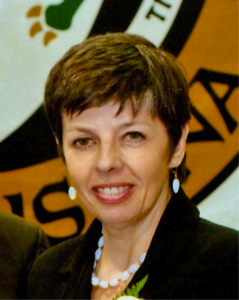
Galina Goloverda
Co-investigator at Xavier Team
Associate Professor, Organic Chemistry
Xavier University of LA
Chemistry Department
NCF Science Building, R 321
1 Drexel Drive
New Orleans, LA 70125
+1 504 520 5417
Fax: +1 504 520 7942
gzgolove AT xula DOT edu
http://www.xula.edu/chemistry/profiles/ggoloverda.phpGalina Z. Goloverda graduated from Kiev State University in 1979 with Master's degree in Inorganic Chemistry. She received her Ph.D degree in Physical Organic Chemistry in 1988 from Pisarzhevskii Institute of Physical Chemistry of the Ukrainian National Academy of Sciences.
Dr. Goloverda's research interests are in the areas of synthetic organic chemistry and materials science; design of non-polymeric organic coating for novel magnetic nanocomposites for biomedical application. The main focus is currently on development and study of hydrophilic organic polydentate ligands that can potentially serve as templating or capping ligands for nanocomposite materials.

Vladimir Kolesnichenko
Co-investigator at Xavier Team
Assistant Professor
Xavier University of LA
Chemistry Department
1 Drexel Drive
New Orleans, LA 70125
+1 504 520 5430
Fax: +1 504 520 7942
vkolesni AT xula DOT edu
http://www.xula.edu/chemistry/profiles/vkolesnichenko.phpGraduated from the National Taras Shevchenko University (Kiev, Ukraine) in 1979 with MS degree in chemistry. Worked at the Institute of General and Inorganic Chemistry of the Ukrainian Academy of Sciences from 1979 to 1993 as a Research Associate initially, and as a Senior Scientist for the last five years. Defended PhD degree in inorganic chemistry in 1986. From 1993 to 1995 worked as a Research Associate at the University of Kansas; from 1996 to 1998 at the University of Iowa as a Postdoctoral Associate. In 1998-1999 worked as a Research Scientist at BlackLightPower Inc. (Cranbury, NJ). In 1999-2003 worked as a Research Specialist at the Advanced Materials Research Institute (New Orleans, LA). In 2004 became a full-time faculty at Xavier University. The objective of current research project is to study all aspects of chemistry of magnetic metal oxide particles and clusters, namely the mechanism of nucleation and growth, surface and colloid chemistry, redox chemistry and the structure and magnetism relationship. These studies can help to develop novel materials for biomedical application (as MRI contrast agents and cell tracking labels), and will be useful for the development of molecular electronics, high-density information storage and catalysis.
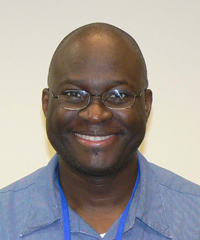
Lamartine Meda
Role in LA-SiGMA: Member of the External Engagement and Workforce Development (EEWD) Committee and Research Member of LA-SiGMA Correlated Organic and Ferroelectric Materials group.
Assistant Professor and Director of PREM
Xavier University of LA and Department Chemistry
1 Drexel Drive
New Orleans, LA
+1 504 520 5324
Lmeda AT xula DOT edu
http://www.xula.edu/prem/index.phpDr. Meda earned a B.S. in chemistry from Salem State University, Salem, MA in 1992 and a Ph.D. in Materials Inorganic Chemistry in 1998 from Northeastern University where he worked on the synthesis of organometallic precursors, chemical vapor deposition (CVD), and thin film electrochemical characterization. From 1999 until 2001, he served as a Postdoctoral Research Associate for the Center for Nonlinear and Nonequilibrium Aeroscience at The FAMU-FSU College of Engineering and the Center for Materials Research and Technology at Florida State University (FSU), Tallahassee, FL under Professor Hamid Garmestani. From 2002 to 2006, Dr Meda served as a Senior Research Scientist at Excellatron Solid State. There, he worked on the development of thin film batteries using plasma-enhanced metal-organic chemical vapor deposition (PE-MOCVD). He held two patents in thin film batteries. Dr. Meda joined the chemistry faculty at Xavier University of Louisiana in 2008 after spending two years as a Visiting Assistant Professor of Chemistry at Auburn University. Dr Meda's research interests are in multifunctional nanomaterials, materials for electrochemical energy storage (batteries), and organometallic precursors for CVD. I am interested in collaborating with theorists in understaning the growth process of nanomaterials (nanorods, nanoplates, etc.) using CVD methods and lithium-ion transport in thin film micro- and nanobatteries.
Kevin Riley
Xavier University of LA Department of Chemistry
NCF 301B 1 Drexel Drive
New Orleans, LA
+1 504 520 5075
kriley3 AT xula DOT edu
http://www.xula.edu/prem/index.php
Dr. Riley's research is all based on computational chemistry techniques and is mainly focused on the treatment of noncovalent interactions. Noncovalent interactions play critical roles throughout Chemistry and are extremely important in protein structure, the interactions of ligands with proteins, material science, and fluid dynamics. The main focus of Dr. Riley's research is in the application of computational methods to treat noncovalent interactions in biological systems, including nucleic acids (DNA/RNA), proteins, and (especially) protein-ligand complexes. Dr. Riley is particularly interested in halogen bonds and the roles that they play in protein-ligand bonding.
-
-
Louisiana Community and Technical College System
-
-
-
Postdoctoral Researchers from Partner Sites
-
Louisiana State University
-

Wei Feinstein
Postdoctoral Researcher, Group of Computational Biology
Department of Biology
Louisiana State University
Baton Rouge, LA 70803
wfeinstein@lsu.edu
http://brylinski.cct.lsu.edu/
Wei Feinstein received a Ph.D. in Medical Sciences from the College of Medicine at University of South Alabama; and a M.S. in Computer Science at the University of Alabama. Wei is interested in developing algorithms and codes for computational biophysics with applications in drug discovery and biomaterial research. The applications include protein structures modeling, ligand binding site prediction, computer-assisted drug development and virtual screening. In addition, she is highly interested in parallel and heterogeneous computing to boost the performance of cpu-intensive codes in biology, physics and chemistry.
Cheri McFerrin
Postdoctoral Researcher
Department of Chemistry
Louisiana State University
Baton Rouge, LA 70803
cmcfer1@lsu.edu
Using computational methods such as GAMESS, NWChem, and Gaussian09 and the supercomputers at LSU, Dr. McFerrin’s post-doctoral research aims to calculate the thermodynamics and kinetics for reactions which are thought to play a role in pollution formation. The recalcitrant nature of studying these reactions experimentally provides the motivation for this computational work.

Brian Novak
Postdoctoral Researcher
Dept. of Mechanical Engineering
Louisiana State University
Baton Rouge, LA 70803
bnovak1@lsu.edu
Brian Novak obtained a B.S. in chemical engineering from Kansas State University in 2002 and a Ph.D. in Chemical Engineering from the University of Notre Dame in 2008. His research interests are in the area of molecular simulations at the atomistic and coarse-grained levels as well as in other methods to extend the time and length scales accessible to molecular simulations. Projects he has been involved in at LSU: 1) Function of the enzyme biotin carboxylase, 2) Transport of small molecules through nanochannels and their interaction with the channel walls, 3) Implementation of a hybrid molecular dynamics-continuum simulation method, 4) Micelles as potential drug delivery agents.
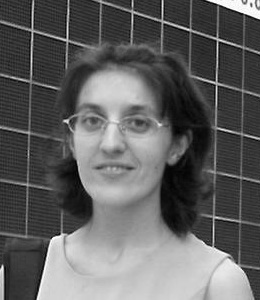
Hanna Terletska
Postdoctoral Researcher
Dept. of Physics & Astronomy
Louisiana State University
Baton Rouge, LA 70803
http://www.phys.lsu.edu/~hterletska/
terletska.hanna@gmail.com
Hanna obtained her Ph.D. in Physics from the Florida State University in 2011. Her research interests include theoretical and computational studies of strongly-correlated and disordered electron systems. This includes quantum critical in Mott transition, phase separation in manganese-doped electron gas, Anderson localization, and the metal-insulator transitions in general. In Hanna's research she has used a variety of computational tools, such as the dynamical mean field theory and the dynamical cluster approximation. At LSU, her primary focus has been on developing the finite cluster typical medium theory for disordered electron system, which would allow for a systematic study of Anderson localization in various materials.

Shuxiang Yang
Postdoctoral Researcher
Dept. of Physics & Astronomy
Louisiana State University
Baton Rouge, LA 70803
yangphysics@gmail.com
In order to understand, utilize and even optimize the very complex and promising properties of strongly correlated electron systems, we need to improve our understanding of the mechanisms controlling their phase diagrams. This can be achieved through numerical simulations. For high-temperature superconductors, for instance, an unbiased simulation method of the model Hamiltonians is a very valuable tool. Over the last several years, I have been working in collaboration with researchers with physics, applied mathematics and computer science backgrounds, on the development of two new techniques with the help of quantum field theory. One is based on the parquet formalism, while the other is based on a so-called dual fermion transformation. Both utilize the idea of multi-scale separation, namely treating physics on different length-scales with methods of different accuracies, and thus are able to deal with the complex and competing physics underlined. The massively parallel codes have been developed that use MPI across the nodes and OpenMP within a node, and therefore can scale up to 30,000 processors on a supercomputer.
-
-
Louisiana Tech University
-
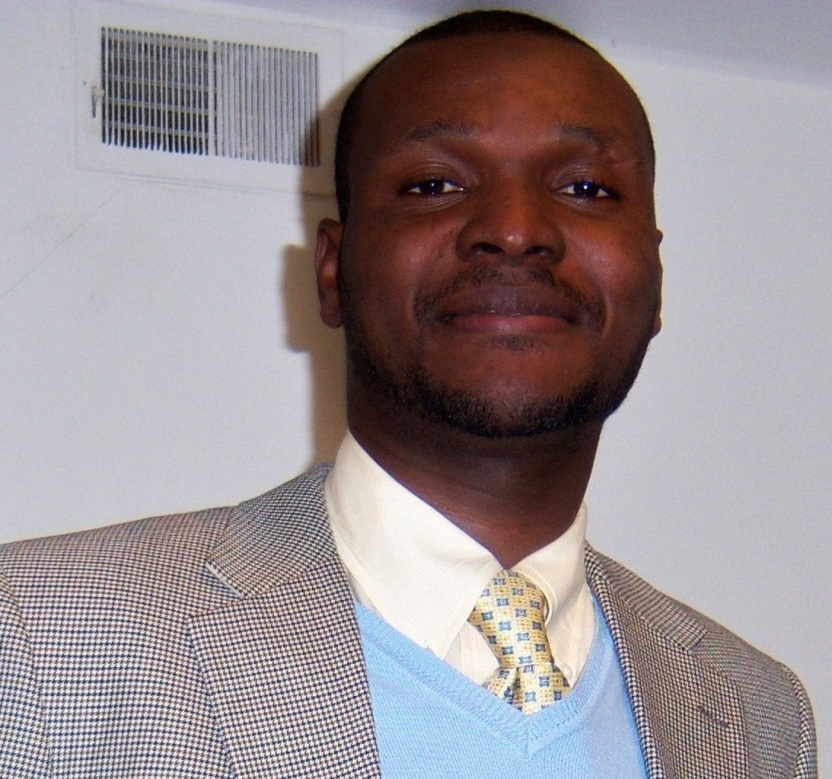
Ayorinde Hassan
Postdoctoral Researcher
Department of Chemistry
Louisiana Tech University
College of Engineering and Science
Ruston, LA 71272
ashassan@latech.edu
Ayorinde Hassan is presently a Postdoctoral Research Fellow at Louisiana Tech University in Professor Ramu Ramachandran’s group. He earned a PhD in Computational chemistry from Jackson State University in December 2011 under the tutelage of Professor Jerzy Leszczynski. Ayorinde received a dual undergraduate degree in Chemistry and Biology from Rust College. His broad research interests are in the areas of theoretical and computational chemistry. In particular, the application of density functional theory (DFT), and other electronic structure theories in studying materials with transportation and energy applications, such as Li-ion battery materials for electric and hybrid electric vehicles. He is also involved in an ongoing project to understand and develop a computational protocol for characterizing and predicting CO adsorption sites on metal surfaces in Fischer-Tropsch reaction and catalysis
-
-
Southern University at Baton Rouge
-
Feng Gao
Postdoctoral Researcher
Department of Physics
Southern University and A&M College
Baton Rouge, LA 70813
feng_gao@subr.edu
Dr. Feng Gao earned his PhD degree from School of Physics and State Key Laboratory for Crystal Materials, Shandong University (China) in 2011. His PhD research was mainly focused on the magnetism of nanostructured materials, including the magnetic properties of the surfaces of semiconductors, the magnetism of doped and undoped nanosheets, nanotubes, nanowires, etc., and also the magnetism of DNA molecules.
Currently, he is a postdoctoral researcher in the Department of Physics of Southern University and is working on the large-scale DFT calculations of the catalytic properties of N-doped carbon nanotubes, including the identification of possible catalytic sites.
Sanjay Kodiyalam
Postdoctoral Researcher
Department of Mechanical Engineering
Southern University and A&M College
Baton Rouge, LA 70813
sanjay_kodiyalam@subr.edu
Dr. Sanjay Kodiyalam is a Postdoctoral Researcher in the Department of Mechanical Engineering at Southern University. He earned his Ph.D. in Physics from the University of Maryland. His postdoctoral work at Louisiana State University was in the area of parallel molecular dynamics computations of structural transformation in semiconductors followed by parallel finite element computations of optic nerve head deformation in the context of the eye disease glaucoma. His current interests are in the area of Visualization using the CAVE and parallel molecular dynamics computations on the LONI machines.
-
-
Tulane University
-
-
University of New Orleans
-
-
Xavier University of Louisiana
-
-
Louisiana Community and Technical College System
-
-
-
Graduate Students from Partner Sites
-
Louisiana State University
-
Sameer Abu Asal
Department of Electrical and Computer Engineering
sabuas1@tigers.lsu.edu
Advisor: Dr. Ramanujam
Sameer Abu Asal is a graduate student in Electrical and Computer Engineering at LSU. He obtained his B.Sc. from the University of Jordan, Jordan. He is interested in parallel algorithms and code optimization for high performance. Sameer is advised by Dr. Ramanujam. Sameer is involved in the following LA-SiGMA Projects: Variational Monte Carlo on Graphical Processing Units, and GPU accelerated Hirsch-Fye.

Toni Borel
Department of Biological and Agricultural Engineering
tborel1@tigers.lsu.edu
Advisor: Dr. Sabliov
Toni Borel received a B.S. in Biological Engineering from Louisiana State University in 2012. She is currently working on polymeric nanoparticle synthesis, characterization, stability, and cellular interactions under the supervision of Dr. Sabliov.

Brandon Borill
Department of Chemistry
bboril1@lsu.edu
Advisors: Drs. Hall and Chen
Co-Advisor: Dr. Mainardi, Louisiana Tech University
Brandon Borill obtained a B.S. in Chemistry from McNeese State University in 2005 and an M.S. in Chemical and Environmental Sciences also from McNeese State University in 2007. Brandon began work towards a Ph.D. in Chemistry in 2008 and joined Dr. Randall Hall's research group in 2009. Brandon's research involves Monte Carlo simulations on metal hydrides to study their properties as hydrogen storage materials.
Yun Ding
Department of Physics & Astronomy
yding8@lsu.edu
Advisors: Drs. Jarrell and Brylinski
Yun Ding obtained his B.S degree from Wuhan University, China, and came to Physics Department at LSU in 2011. Currently he is intensively involved in the GPU docking project, collaborating with Ye Fang from the electric and engineering department. The goal of the project is to develop a reliable ligand docking software, capable of predicting accurate binding pose with a satisfactory computation speed, based upon the advantageous graphic processing unit(GPU) architecture.
Chinedu Ekuma
Department of Physics & Astronomy
cekuma1@lsu.edu
Advisors: Drs. Jarrell and Moreno
Chinedu Ekuma obtained a B.S. in Industrial Physics with summa cum laude from Ebonyi State, Nigeria in 2006, M.S. in Theoretical Condensed Matter Physics from University of Nigeria, Nigeria in 2009 and M.S. in Computational Condensed Matter and Material Physics from Southern University and A & M College, Baton Rouge, LA in 2010. His research interest is in the area of ab-initio, first principle study of the properties of (strongly correlated) materials which is deemed pivotal to further progress in these areas. The understanding of the underlying physics might help to make predictions to guide experimentalists in search for improved materials.
Ye Fang
Department of Electrical and Computer Engineering
yfang11@tigers.lsu.edu
Advisor: Dr. Ramanujam
Ye Fang obtained his B.S in Electrical Engineering from Shandong University at Weihai, 2009. His research interests involve collaborated software and architecture optimizations for high-performance computation. He has been involved in the following LA-SiGMA projects: 1) Monte Carlo simulation of 3D ising model and parallel temperating, implemented in CUDA C++. 2) Parquet project that employs latency hiding technique for concurrent computation and data transformation.
Sheng Feng
Department of Physics & Astronomy
sfeng4@lsu.edu
Advisors: Drs. Jarrell and Moreno
Sheng Feng is a graduate student at Louisiana State University. He received his B.S. from University of Science and Technology of China in 2006, and then joined Prof. Mark Jarrell and Prof. Juana Moreno's group at LSU. Currently he's working on a CUDA Parallel-Tempering project, and focuses on scalable simulations on Graphics Processing Units (GPUs) to understand the properties of different materials.
Kasra Fattah-Hesary
Department of Mechanical Engineering
kfatta1@tigers.lsu.edu
Advisor: Dr. Nikitopoulus
Kasra Fattah-Hesary obtained a B.S. in Mechanical Engineering from University of Tehran, Iran in 2004 and received a Master’s degree in Aerospace Engineering from Sharif University of Technology, Iran in 2007. Kasra is pursuing a Ph.D. in Mechanical Engineering at Louisiana State University, with a research focus on implementation of a hybrid molecular dynamics-continuum simulation method for modeling and numerical simulations of the motion of small molecules, such as individual DNA bases through nano-scaled fluidic geometries.
Anoosha Forghani
Department of Mechanical Engineering
aforgh1@lsu.edu
Advisor: Dr. Devireddy
Anoosha obtained a B.S. in Materials Engineering from Isfahan University of Technology in 2011. She started the PhD program during spring 2013. Now she is working on in-situ Polymerization and its application in Bone Tissue Engineering under the supervision of Dr. Devireddy.

Rakib Hasan
Department of Computer Science and Engineering
rhasan@cct.lsu.edu
Advisor: Dr. Whaley
Rakib is a graduate student in Computer Science and Engineering Division at LSU. He obtained his B.Sc. from Bangladesh University of Engineering and Technology (BUET). Rakib is currently working with Dr. R. Clint Whaley on large scale parallelization and high performance optimization in ATLAS.
Xiaoxia He
Department of Chemical Engineering
xhe6@tigers.lsu.edu
Advisor: Dr. Hung
Xiaoxia He is a Ph.D candidate in the Department of Chemical Engineering at Louisiana State University. She earned her M.S. from Tianjin University in China. Her current work includes molecular dynamical simulation studies of ionic liquids such as the heterogeneities of ionic liquids confined inside nanoporous materials, the nucleation of ionic liquids at low temperature, which provide fundamental understanding of the structural and dynamical properties of ionic liquids.
Xu Huang
Department of Mathematics
xhuang4@tigers.lsu.edu
Advisor: Dr. Lipton
Xu Huang is a graduate student in the Department of Mathematics at Louisiana State University. She obtained her B.S. from the University of Science and Technology of China. She is interested in material science.
Enzhi Li
Department of Physics & Astronomy
eli@tigers.lsu.edu
Advisor: Dr. Jarrell
Enzhi Li obtained his B.S. from Nanjing University of Aeronautics and Astronautics in 2009. He joined Dr. Jarrell’s group in 2011, and currently is working on periodic Anderson model using dynamical mean field theory.
Troy Loeffler
Department of Chemistry
tloeff1@lsu.edu
Advisor: Dr. Chen
Troy Loeffler graduated from Washington State University in 2011 completing his B.S. in Chemistry and Theoretical Mathematics. He is now working toward his Ph.D. at Louisiana State University in Baton Rouge. His current work includes monte carlo simulation studies of surface catalyze d nucleation which has applications to such things as nano-particle synthesis, ice inhibiting surfaces for aircraft, atmospheric processes, etc.
Lucy Kiruri
Department of Chemistry
lkirur1@lsu.edu
Advisors: Drs. Dellinger and Hall
Co-Advisor: Dr. Ramachandran, Louisiana Tech University
Lucy Kiruri obtained both her B.S. and Masters in Chemistry from Kenyatta University (Nairobi, Kenya), in 2004 and 2009, respectively. Currently she is pursuing her Ph.D. in Dr. Dellinger and Dr. Hall group. Her research entails both experiments and computation chemistry. She is using the state-of-the-art software (Gaussian09, and GAMESS), and aims to study the reactions of copper oxide clusters with phenol /chlorophenol moities to provide a model for surface-mediated reactions suggested to occur in the cool zone regions during combustions.
Xiaoyao Ma
Department of Physics & Astronomy
xma9@lsu.edu
Advisors: Drs. Jarrell and Moreno
Xiaoyao Ma was trained in theoretical physics, now he wants to explore new advanced computational tools to solve the problems in physics. He has a Bachelor Degree in Physics from Lanzhou University in China and earned a Master’s Degree from Georgia Institute of Technology in 2011.

Conrad Moore
Department of Physics & Astronomy
cmoor54@lsu.edu
Advisor: Drs. Jarrell and Moreno
Conrad Moore graduated with a B.S. in Physics from Bucknell University, Lewisburg PA. Conrad is interested in the algorithms and formalism of strongly correlated materials. I am currently working on a GPU-accelerated Hirsch-Fye Quantum Monte Carlo algorithm that will be useful as an efficient impurity cluster solver for use in my future work and for use by other researchers in the LA-SiGMA collaboration.
Ryky Nelson
Department of Physics & Astronomy
rnwls12@tigers.lsu.edu
Advisors: Drs. Jarrell and Moreno
Ryky Nelson earned his B.S. in Physics from University of Indonesia in 2007. Ryky came to LSU in Spring 2009 and started doing research in Fall 2010. Ryky's research is in the area of strongly correlated systems especially to model and to calculate properties of magnetic semiconductors using a Density Functional Theory (DFT)-based downfolding method combined with Dynamical Mean Field Approximation (DMFA). The calculations are solved self-consistently and numerically using high performance computers.
Matthew Patterson
Department of Physics & Astronomy
mpatt15@tigers.lsu.edu
Advisor: Dr. Sprunger
Matt Patterson received a B.A. in Physics from Rice University in 2007 and is currently pursuing a Ph.D. in the LSU Department of Physics and Astronomy. His research focus is on experimental surface science studies of materials, focusing on two broad categories: exploring the morphology and electronic properties of supported noble metal nanoclusters as model systems for catalytic applications (particularly CO oxidation and CO2 reduction), and studying the electronic structure of aromatic adsorbates on single-crystal metal oxides as models for the formation of environmentally persistent free radicals from combustion-generated particulate matter.
Haoyu Qi
Department of Physics & Astronomy
hqi2@tigers.lsu.edu
Advisor: Dr. Vekhter
Haoyu Qi obtained his B.A. degree in Physics from Beijing Institute of Technology in 2012. Then he joined Prof.Ilya Vekhter's group. He is now working on spontaneous magnetization at the interface of superconductor, topological superconductor and Majarona fermions.

Kaushik Ragava Rajagopalan
Department of Electrical and Computer Engineering
krajag1@tigers.lsu.edu
Advisor: Dr. Thakur
Kaushik Ragava Rajagopalan is a Master’s student from the Electrical and Computer Engineering department with a thesis focused on GPU computing. Kaushik is working toward an implementation of a CUDA Library for an efficient Sparse Matrix-vector multiplication. Kaushik's areas of interest include: GPU computing, parallel programming, and Computer Architecture. Kaushik's thesis will help solve the eigen-value problems of huge Hamiltonian matrices. Kaushik holds a Bachelor’s degree in Engineering and Electronics and Communication Engineering from Anna University, Chennai.
Yan Shen
Department of Chemical Engineering
yshen15@lsu.edu
Advisor: Dr. Hung
Yan Shen is a graduate student in Chemical Engineering at LSU. She received a Bachelor degree from East China University of Science and Technology and a Master degree from Queen’s University Belfast in UK both in Chemical Engineering. She is working on molecular dynamics simulation focusing on the understanding the physical properties of ionic liquids confined inside nanoporous materials.
Md Majedul Haque Sujon
Computer Science and Engineering
msujon@cct.lsu.edu
Advisor: Dr. Whaley
Md Majedul Haque Sujon is a graduate student in Computer Science and Engineering division at Louisiana State University. Majedul obtained his M.S. degree from University of Texas at San Antonio, USA and his B.S. degree from Bangladesh University of Engineering and Technology, Bangladesh. His research focus is in the area of High Performance Computing, Empirical Compilation and Compiler Optimizations. He has been doing research on iFKO (Iterative Floating Point Optimizer) and developing modules for that project under the close supervision of Dr. R. Clint Whaley.

Bibek Wagle
Department of Electrical Engineering and Computer Science
bwagle3@tigers.lsu.edu
Advisor: Dr. Karki
Bibek Wagle is a graduate student in the Electrical Engineering and Computer Science department at LSU. He obtained his Bachelors Degree in Electronics Engineering from Tribhuvan University, Nepal. His Masters degree is from Teesside University in the United Kingdom. He Started his PHD in Computer Science at LSU in Fall 2013. He is advised by Dr. Bijaya Karki.
Yan Wu
Department of Physics & Astronomy
ywu8@tigers.lsu.edu
Advisor: Dr. DiTusa
Yan Wu is a graduate student in Physics and Astronomy at LSU. She received her B.S. in Physics from Northwest University at China 2006 and M.S. in Physics from UCAS at China 2009. Her research focuses on the magnetic properties and quantum critical behavior in low carrier density of silicone based semiconductors.
Kai Xia
Department of Mechanical Engineering
kxia1@tigers.lsu.edu
Advisor: Dr. Moldovan
Kai Xia received his B.S. in Physics from the University of Science and Technology of China and his M.S. from Fudan University. As a Ph.D. student in the Department of Mechanical Engineering, with support from LA-SiGMA, he uses molecular dynamics simulations to investigate the mechanism(s) of surfactant self-assembly into micelles and vesicles and to better understand the parameters controlling the efficiency of encapsulation of various molecules (drugs) into these structures.
Jumao Yuan
Department of Chemistry
jyuan4@lsu.edu
Advisor: Dr. Butler
Jumao Yuan is a graduate student in Chemistry at LSU. She obtained her B.S in Chemistry at Beijing Normal University, China. Currently, she is working on X-ray tomography of battery, computation and workflow design in Dr. Butler’s group.
-
-
Louisiana Tech University
-
Kirill Arapov
Institute for Micromanufacturing
kirill.arapov@gmail.com
Advisor: Dr. Lvov
Kirill A. Arapov received his M.S. degree in Biotechnology at Gubkin Russian State University of Oil and Gas in 2007. During his university years in Russia, he won The National Chemistry Contest in 2006. He is an author of 15 articles on synthesis of nanomaterials and their applications. He was awarded the 1-st place prize in The International Scientific Conference of Young Scientists «Lomonosov – 2008», Moscow. His research interests include surface chemistry, organic nanomaterials synthesis, drug delivery systems and transmission electron microscopy.
Muhammed Assad
Department of Mathematics
assad.ch@gmail.com
Advisor: Dr. Dai
Mr. Muhammad Assad is a Masters candidate in Molecular Science & Nanotechnology at Louisiana Tech University. His research interests include numerical methods for partial differential equations (higher-order compact schemes, finite difference, finite element, stability, convergence), numerical heat transfer (thin films, multi-layer thin films, bio-heat transfer) and Computational fluid dynamics (finite difference, control volume).

Shawn Cole
Institute for Micromanufacturing
shawn.cole_phy@yahoo.com
Advisor: Dr. Mainardi
Shawn Cole received his Bachelor of Science degree in Physics with an emphasis in Mathematics from Tougaloo College in 2011, and he is currently pursuing a Doctor of Philosophy degree in Molecular Sciences and Nanotechnology at Louisiana Tech University. Shawn's present research focuses on the first-principles computational modeling of Ethanol Oxidation on PtxRuySnz electrocatalysts for Fuel Cell Applications. In doing so, a fundamental understanding of electrocatalysts and ethanol oxidation mechanism manipulation can be ascertained for improved fuel cell efficiency. Shawn works with the Chemical Engineering research group under the tutelage of Dr. Daniela Mainardi.
Ling Cui
Institute for Micromanufacturing
lcu003@latech.edu
Advisor: Dr. Murray
Ling Cui received her Bachelor of Engineering in Chemical Engineering in Dalian Nationalities University in 2009. She is now in combined M.S./Ph.D. engineering program with Micro&Nanoscale system. Ling's research interest focuses on the area of material science. Ling currently uses impedance spectroscopy to analyze the electrochemical response of NOx exhaust gas sensors composed of Au electrodes and with a yttria-stabilized zirconia.
Divya Narayan Elumalai
Department of Physics, Institute for Micromanufacturing
dne003@latech.edu
Advisor: Dr. Derosa
Divya Narayan Elumalai is a Graduate student with the Department of Physics and Institute for Micromanufacturing at Louisiana Tech University. Divya is pursuing a PhD in Engineering Physics under the guidance of Dr. Pedro Derosa, and is concurrently pursuing a Master’s degree in Micro Systems Engineering. Divya has a B.S. and M.S. in Physics. Divya’s research focus is on “Molecular storage and Transport in Nanotubes”. Divya studies the characteristics and the properties that affect the transport specifically diffusion and storage in nanotubes in.
Fei Han
Department of Mathematics
fha003@latech.edu
Advisor: Dr. Dai
Fei Han received a Bachelor's degree in Mathematics from China University of Geosciences (Wu Han) in China, a M. Sc. Degree in Mathematics from Huaqiao University in China. Fei is a Ph.D. candidate in the CAM program (Computational Analysis and Modeling) at Louisiana Tech University. Fei’s research interest focuses on the numerical solutions of partial differential equations.

Purnima Kharidehal
Department of Chemical Engineering, Institute for Micromanufacturing
purnimakhal@gmail.com
Advisor: Dr. Mainardi
Purnima Kharidehal received her Master’s degree in Chemical Engineering from Louisiana Tech University in 2011, and she is currently working towards a Ph.D. Purnima’s present research is focused on Multi-scale Modeling of Methanol Oxidation by Ion Modified Methanol Dehydrogenase Enzyme a novel enzymatic-catalyst for methanol fed biofuel cells. Theoretical modeling of Methanol dehydrogenase (MDH) enzyme active site using representative models is done using QM/MM/DFT-MD techniques. Free energy barriers associated with several reaction mechanisms of MDH for oxidation of methanol were obtained by classical Transition state theory. Emphasis of my thesis research is on understanding the role of ions in the active site of MDH and their interactions with methanol. A combination of tools involving Density Functional Theory (DFT), Transition State Theory (TST), Molecular Mechanics (MM) and Kinetic Monte Carlo (kMC) are combined in order to model enzyme kinetics.

Sajin Killa
Department of Chemical Engineering, Institute for Micromanufacturing
ski002@latech.edu
Advisor: Dr. Mainardi
I received my B.Sc. in Biomedical Engineering with Chemical Engineering concentration from Louisiana Tech University in May 2011. I am currently pursuing my Master's degree in Chemical engineering. My research is based on the computational modeling of Yttrium Stabilized zirconia (YSZ) using Density Functional Theory. The main purpose of this research is to determine the effect of NOx derivatives in YSZ. I would study the dynamic properties of YSZ during this phase as the properties of YSZ vary drastically with different temperature and physical condition. YSZ is used as electrolyte in solid oxide fuel cells and has been successfully mobilized in automobile industries.

Sudapa Laosookasathit
Department of Compuer Science
sla036@latech.edu
Advisor: Dr. Leangsuksun
Supada Laosooksathit is a Ph.D. candidate in the Computational Analysis and Modeling program at Louisiana Tech University. Her research interest is in the area of GPGPU programming, including fault tolerance for GPGPU.
Anjana Paudyal
Department of Electrical Engineering
apa026@latech.edu
Advisor: Dr. Derosa
Anjana Paudyal is a Graduate student in the Department of Electrical Engineering at Louisiana Tech University. Anjana is currently working under Dr. Pedro Derosa. Her research interest includes studies of magnetic properties of Metalloporphyrin and other organometallic compounds, which are expected to be promising molecules for the spintronic device application.. Besides that Anjana is also interested in studying transport and electrical properties of different molecules by calculating their conductivity across metallic electrodes.
Vishwa Priya Podduturi
Department of Physics, Institute for Micromanufacturing
vishwa.priya@gmail.com
Advisor: Dr. Derosa
Ms. Vishwa Priya recived her Bachelors of Engineering in Bio Medical Engineering in Osmania University. She is currently pursuing her Ph.D. in Bio medical Engineering and Masters in Applied Physics in the Louisiana Tech University. Her research interest includes simulating the movement of nanoparticles in the cancer blood vessels to know the parameters influencing their delivery to the cancer tissues.

Neelima Ranjitkar
Institute for Micromanufacturing
nra010@latech.edu
Advisor: Dr. Derosa
Neelima Ranjitkar is a graduate student of Electrical Engineering working under Dr.Pedro Derosa. Neelima’s research interest includes studies of Magnetic Properties of MetalloPorphyrins and Organometallic Clusters, as well as modeling and characterization of an array of metalloporphyrin nanostructure with the goal of optimizing their properties and using Gauss View to construct molecular systems using its molecule building facility as well as for calculations.
Pankajkumar Sancheti
Department of Chemistry
pankajsancheti@gmail.com
Advisor:Dr. Siriwardane
Pankajkumar Sancheti is a graduate student in the the Chemistry Department at Louisiana Tech University. He obtained his Bachelor of Science in Pharmaceutical Sciences from the Shivaji Unversity, India. Pankaj is advised by Dr. Upali Siriwardane. He is currently working on the synthesis and characterization of silica, alumina and titanium dioxide mesoporous materials and nanoparticles. He is also interested in the analytic method development and its validations.
James Solow
Department of Computational Analysis and Modeling
jsolow@latech.edu
Advisor: Dr. Bishop
James Solow is a graduate student in the Department of Computational Analysis and Modeling at Louisiana Tech University. His research efforts under the supervision of Dr. Thomas Bishop is the molecular modeling of the structure and dynamics of DNA, Nucleosomes, and Chromatin. James received his B.S. in Mathematics and Physics and Masters of Mathematics from Eastern New Mexico University.
Fernando Soto
Department of Chemical Engineering, Institute for Micromanufacturing
fso002@latech.edu
Advisor: Dr. Mainardi
Fernando Soto received a B.Sc. in Industrial Engineering from Louisiana Tech University in 2007, he is now in a combined M.S. / Ph.D. engineering program with emphasis in Micro/Nanotechnology and Micro/Nanoelectronics. Fernando currently uses first-principles computational modeling to gain a basic understanding of advanced materials that are potential candidates for on-board hydrogen storage applications. He uses density functional theory to study the structural, kinetics, and thermodynamic properties of complex metal hydrides. Recently, the research focus is on the effectiveness of catalytic additives on bulk and surface alloys.
Shuo Yao
Department of Chemistry
sya007@latech.edu
Advisor: Dr. Ramachandran
Co-Advisor: Dr. Hall, Louisiana State University
Shuo Yao received a Master’s Degree in Chemistry from Mississippi College in 2010. Shuo is now a Ph.D. student in Nano Engineering at Louisiana Tech University. Shuo’s research interest focuses on the area of computational and theoretical molecular systems. Recently, Shuo has been working with Dr. Ramachandran and Dr.Wick to build a metal oxide force field.
Yafei Zhao
Institute for Micromanufacturing
yzh015@latech.edu
Advisor: Dr. Lvov
Yafei Zhao received a Bachelor and Master in Zhengzhou University, China majoring in Environmental Science. She began the PhD program in Engineering at Louisiana Tech in 2011. Yafei's LA-Sigma research is focused on the application of natural halloysite clay nanotubes and modified halloysite nanotubes with stoppers, including in wasterwater treatment, gas storage, drug release, and energy storage.
-
-
Southern University at Baton Rouge
-
John Idoko Ejembi
Department of Physics
idokojj@yahoo.com
Advisor: Dr. Guang-Lin Zhao
John I. Ejembi graduated with a B.S. degree in Physics from the University of Jos, Plateau State, Nigeria in 2006. He has six (6) years of post-graduation work experience mainly in the service sector. He is currently enrolled in the Master of Science Degree program in Mathematics and Physics with a concentration in Physics at Southern University and A & M College, Baton Rouge (SUBR), LA. He also works as a Graduate Research Assistant in the Department of Physics. His graduate research work is in the field of Materials Science with interests in microwave absorption of carbon nano-tubes composites in polymer matrix. His primary focus is to develop ways to promote and to increase the dispersion and alignment of CNTs in the matrix.

Chidinma Imediegwu
Department of Mechanical Engineering
cimediegwu@gmail.com
Advisor: Dr. Samuel Ibekwe
Chidinma Imediegwu holds a Bachelor’s Degree in Mechanical Engineering and a minor in Business Administration from Southern University and A & M College, Baton Rouge, Louisiana. She is currently enrolled in the Master of Engineering program at Southern University with a concentration in Mechanical Engineering and a focus in Shape Memory Polymer Composites under the supervision of Dr. Samuel Ibekwe.
Bethuel Khamala
Department of Physics
Bethuel_khamala_00@subr.edu, khamalabethuel@yahoo.com
Advisor: Dr. Diola Bagayoko
Mr. Bethuel Khamala obtained his B.S. in Physics in 2005 and his M.S in Physics in 2007 from the University of Moi in Kenya. His research area focused on the properties of the surfaces of semiconductors specifically, solar cells. Currently, he is a Graduate Research Assistant in the Department of Physics at Southern University and A&M College pursuing a Master of Science degree in Mathematics and Physics with a concentration in Physics. His thesis research is on the Ab-initio Calculations of the Electronic Properties of Materials (atoms, molecules and semiconductors) under the supervision of Dr. Diola Bagayoko.
Redeemer Nutsugah
Department of Mechanical Engineering
redeemernutsugah@gmail.com
Advisor: Dr. Jana
Redeemer Nutsugah holds a Bachelor of Science degree in Aerospace Engineering from Kwame Nkrumah University of Science and Technology in Kumasi, Ghana. He is currently enrolled in the Master of Engineering program with a concentration in Mechanical Engineering and a specialty in Thermal Science and Engineering at Southern University and A & M College, Baton Rouge (SUBR), Louisiana. Currently, Mr. Nutsugah is a Graduate Research Assistant in the Department of Mechanical Engineering. His research is entitled "Experimentation and Computation of Thermal Properties of Insulation Materials in Extreme (Hyperbaric) Aerospace Environment." The results from this research will be useful in future Venus missions. Precise data which relate thermal conductivities of various insulation materials to increased ambient pressure will be made available from this research. Past missions to Venus have not lasted long enough due to the hostile - high pressure and high temperature - environment posed by the Venusian atmosphere. Data on the thermal properties of insulation materials to be used will help in the design of insulation that will be able to withstand the Venusian atmosphere.

Ifeanyi Humphrey Nwigboji
Department of Physics
nifeanyih@yahoo.com
Advisor: Dr. Diola Bagayoko
Ifeanyi H. Nwigboji obtained his B.S. in Industrial Physics from Ebonyi State University in Abakaliki, Nigeria in 2008. He taught Physics at the High School Level before proceeding to Southern University and A&M College Baton Rouge, LA to pursue a Master of Science in Mathematics and Physics with a concentration in Physics. He works as a Graduate Research Assistant with research interests in "Electromagnetic Properties of Neurons."
Bryant Ross
Department of Physics
bryantrossii@bryantrossii.info
Advisor: Dr. Diola Bagayoko
Bryant Ross graduated from the University of Arkansas at Pine Bluff in 2001 with a B.S. in Physics. He conducted optical research there on the “Improvements in the Soliton Collision Experiment.” He is currently attending Southern University and A&M College at Baton Rouge (SUBR), LA. He is pursuing a M.S. in Mathematics and Physics with a Physics Concentration. His thesis research involves the study of ab-initio, self consistent local density approximation (LDA) Computational calculations of electronic and related properties of materials. His aim is to improve telescope construction Materials that will reflect and sense all parts of the elector-magnetic spectrum.
Anthony Stewart
Department of Physics & Math
anthony_stewart@subr.edu, tstew08@gmail.com
Advisor: Dr. Diola Bagayoko
Anthony Stewart received the B.S. degree in Physics from Southern University & A&M College In 1999. He then received the M.S. and Ph.D. degree in Materials Science & Engineering from the University of Florida in 2003 and 2008, respectively. His dissertation work focused on the epitaxial (MBE/MOMBE) growth and characterization of novel oxide materials on III-V semiconductors for MOS diode applications. He is currently pursuing the M.S. degree in Mathematics and Physics with a concentration in Physics at Southern University & A&M College. His research area focuses on the Ab-initio Calculations of the Electronic Structure of Materials, particularly CdSe. The results of these calculations may be used to guide experimentalists in the development of novel photovoltaic and catalytic materials for solar cells and PEMFCs, respectively.
-
-
Tulane University
-
Amin Azizi
Department of Chemical & Biomolecular Engineering
aazizi@tulane.edu
Advisor: Dr. Pesika
Co-Advisor: Dr. Caruntu, University of New Orleans
Amin obtained his M.Sc. degree in Materials Science and Engineering from Sharif University of Technology (Tehran, Iran) in 2009. His current research interest includes synthesis and characterization of carbon nanotubes for the fabrication of supercapacitors.
Mangesh Chaudhari
Department of Chemical & Biomolecular Engineering
mchaudha@tulane.edu
Advisor:
Jin Hu
Department of Physics & Engineering Physics
jhu@tulane.edu
Advisor: Dr. Mao
Co-Advisor: Dr. Spinu, University of New Orleans
Jin Hu graduated from University of Science and Technology of China (USTC) with a B.S. degree in 2008, and then started his Ph.D life in Dr. Zhiqiang Mao’s research group in the department of Physics and Engineering Physics at Tulane University. His research interests focus on strongly correlated physics. Currently he is working on the superconducting pairing symmetry and the interplay between magnetism and superconductivity in iron chalcogenide superconductor. His work includes single crystal growth and low-temperature measurements on electronic, magnetic, and thermal dynamic properties.
Arkady Kurnosov
Department of Chemistry
akurnoso@tulane.edu
Advisor: Dr. Burin
Arkady recieved a Master's Degree in Physics from Lomonosov Moscow State University (Russia) in 2004. He joined the PhD programm in the Department of Chemistry at Tulane University in 2009. Arkady's research interests include: Theoretical studies of Energy transport in polyatomic molecules; DNA charge transport; memory effects in Coulomb glass; and mathematical modeling of Amplified Spontaneous Emission in random Lasers.
John Leveritt
Department of Chemistry
jleverit@tulane.edu
Advisor: Dr. Burin
John M. Leveritt III graduated from Carroll University with a B.S. degree foucsing in biochemistry in 2008 and then started his Ph.D. in Dr. Alexander L. Burin's research group. Research interests include studying iron oxide clusters as potential small molecular magnets, the mechanism of charge transfer through DNA, and low temperature phenomena found in glassy systems.
Lixin Liu
Department of Chemical & Biomolecular Engineering
lliu1@tulane.edu
Advisor: Dr. Ashbaugh
Co-Advisor: Dr. Moldovan, Louisiana State University
Lixin Liu recieved a B.S. degree in Chemical Engineering and Intensive English from the Dalian University of Technology (DUT) in 2009. Lixin Liu is a Ph.D. candidate in the Department of Chemical and Biomolecular Engineering at Tulane University. Lixin's current research interests include: 1) Using molecular dynamic simulation to study Copolymer's structure within WCA and L-J potential; 2) MD simulation of interaction between various amino acids and micelle; 3) thermal dynamic property of Aqueous solution.
Ludi Miao
Department of Physics & Engineering Physics
lmiao@tulane.edu
Advisor: Dr. Mao
Co-Advisor: Dr. Spinu, University of New Orleans
Ludi Miao received his B.S. degree in Physics from Peking University in 2008 and currently works in the department of Physics and Engineering Physics at Tulane University as a Ph. D. candidate. Currently he is working on transition metal oxide (TMO) thin films such as strongly correlated Ca2RuO4 prepared by pulsed laser deposition (PLD) method and physical properties characterization such as electrical transport, magnetism and anisotropy.
Brittany Myers
Department of Chemistry
bmyers1@tulane.edu
Advisor: Dr. Grayson
Brittany K. Myers graduated from Baylor University in 2010 with a B.S. in Biochemestry and a minor in Spanish. She joined Dr. Scott Grayson's group at Tulane that summer. Her primary research interests are syntheses and applications of dendrimers and novel polymers.
Yi Wang
Department of Chemistry
ywang4@tulane.edu
Advisor: Dr. Grayson
Yi Wang graduated from Peking University (Beijing, China) in 2008 with a B.S. degree in Chemistry, and went to Tulane University to pursue her Ph.D. in Chemistry. Currently she is working on the design, synthesis and characterization of amphiphilic homopolymers and complex polymer architectures, and their potential usage in drug delivery.
Boyu Zhang
Department of Chemistry
bzhang3@tulane.edu
Advisor: Dr. Grayson
Boyu Zhang graduated from Hefei University of Technology with a B.S. degree in 2006, and then got his M.S degree in University of Science and Technology of China(USTC)in 2010. Now he is pursuing his Ph.D degree in Dr Grayson's group in the department of Chemistry at Tulane University. All his research interests focus on the polymer chemistry field. Now he is working on the synthesis , characterization and application of cyclic polymer. He also working on using living polymerization and click chemistry to get multi-arms and mikto-arms polymers.
Wei Zhang
Department of Chemical and Biomolecular Engineering
wzhang4@tulane.edu
Advisor: Dr. Pratt
Wei Zhang graduated from Beijing University of Chemical Technology (BUCT) in 2009 with a B.S. degree, and went to Tulane University to pursue his Ph.D. Currently he is working to characterize the interactions between single--wall carbon nanotubes (CNTs) and the components of a filling electrolyte solution. Propylene carbonate (PC) is the solvent of choice for those solutions and calculations on uncharged CNTs and PC are in progress. The research has the important target of treating charged CNTs and ions in the solution.
-
-
University of New Orleans
-

Shiva Adireddy
Department of Chemistry, AMRI
sadiredd@uno.edu
Advisor: Dr. Caruntu
Shiva Adireddy is a third year graduate student in the Advanced Materials Research Institute (AMRI) at the University of New Orleans where he is advised by Dr. Gabriel Caruntu. His research interests involve synthesis and characterization of ferroelectric and ferromagnetic colloidal nanoparticles with controlled morphology and assemble them into highly ordered ferroelectric-ferromagnetic superlattices. Studies involve the use of powder X-ray diffraction, Raman, FTIR, UV-VIS, TG/DTA, AFM, SEM, TEM, VSM, FMR and SQUID. He earned his B.S. degree in Mathematics, Physics and Chemistry in May- 2005 and Master’s in Organic Chemistry in May - 2007 from Osmania University, India.

Kalika Murthy Aritakula
Department of Chemistry
karitaku@uno.edu
Advisor: Dr. Rick
Kalika Murthy Aritakula received a M.Sc in Chemistry from University of Hyderabad, India. Now he is working on interaction of propylene carbonate with graphite surface and to calculate the contact angle using MD simulations.
Andrei Diaconu
Department of Physic, AMRI
adiaconu@uno.edu
Advisor: Dr. Spinu
Andrei Diaconu received his B.Sc. degree in Physics at Alexandru Ioan Cuza Univeristy, Iasi, Romania in 2006 followed by a M.S. degree in Theoretical Magnetism in 2008. In 2009 he joined Dr. Leonard Spinu's group at University of New Orleans where he received a M.S. degree in Electrical Engineering and Applied Science in 2011. He is currently in his 4th year of his doctoral studies working on cryogenics and magnetism focusing on characterization of iron based superconductors at ultra-low temperatures.
Rahmatolah Eskandari
Department of Physics, AMRI
Rahmatollah.es@gmail.com
Advisor: Dr. Malkinski
Rahmatolah Eskandari received a B.Sc. in Applied Physics in 2002 from Amirkabir University of Technology (Tehran Polytechnic) in Tehran, Iran, and received a M. Sc. in Solid State Physics in 2006 from University of Tabriz in Tabriz, Iran. Rahmatolah is currently working on making and characterizing multiferroic and magnetic material thin films as a graduate student in Advanced Materials Research Institute at the University of New Orleans under the supervision of Dr. Malkinski.

Anasuya Kolavennu
Department of Chemistry
akolaven@uno.edu
Advisor: Dr. Mobley
Anasuya Kolavennu is from Hyderabad, India. Anasuya has a Master’s degree in Inorganic Chemistry from India. Anasuya is working towards a Ph.D. in Chemistry at the University of New Orleans, and is currently working on the ibuprofen hydration project.

Shuai Liu
Department of Chemistry
sliu2@uno.edu
Advisor: Dr. Mobley
Shuai Liu received his B.S. degree in Pharmaceutical Science from Shandong University (Jinan, China) in 2010. He is now working on predicting binding free energy between small molecules and protein using Molecule Dynamics (MD) method in Dr. Mobley’s lab.
Taha Rostamzadeh
Department of Chemistry
trostamz@uno.edu
Advisor: Dr. Caruntu
Taha Rostamzadeh joined Dr. Gabriel Caruntu's group at the University of New Orleans in 2011 as a Ph.D. student. He received his Master's degree in Nano-materials from Tarbiat Modares University in Tehran, Iran. He is currently working on synthesis and characterization of colloidal ferroelectric and ferromagnetic Nanocrystals and their self assembly.
Joshua Shraberg
Department of Chemistry
jshraber@my.uno.edu
Advisor:
Joshua Shraberg received a B.S in Molecular Biology from Tulane University in 2001, and a M.S. in Molecular Biology from Tulane University in 2002. He is currently studying structure and energetics of peptide binding to polyphenols and thermodynamics of water binding to protein cavities.
Amin Yourdkhani
Department of Chemistry, AMRI
ayourdkh@uno.edu
Advisor: Dr. Caruntu
Amin Yourdkhani joined Dr. Gabriel Caruntu’s group at the University of New Orleans in 2009 as a Ph.D. student. He received his Master’s degree in Materials Science and Engineering. Developing the Liquid Phase Deposition (LPD) technique for the functional ceramics in complex geometries is the field of his interest.
-
-
-
Staff
-

Lindsay Gouedy
LA-SiGMA Outreach/Assessment Coordinator at LA Tech
P.O. Box 10198 T.S.
Reese Hall Rm 125
Louisiana Tech University
Ruston, LA 71272
Phone: (318) 245-8684
lgouedy@latech.edu
Lindsay Gouedy, a 2009 graduate of Louisiana Tech University with a Bachelor's of Science in Agricultural Economics, has joined the LaSIGMA family. Mrs. Gouedy brings with her five years of experience as an Environmental Education Consultant. Over the past five years she has served as contractor to the Sparta Groundwater Commission, developing and correlating environmental education curriculum, coordinating education events for students and adults, and coordinating fundraising events. Mrs. Gouedy has also successfully completed similar contracts with Louisiana Farm Bureau's Ag in the Classroom and Louisiana Department of Ag and Forestry. She currently resides in Ruston, LA with her husband Joe and two beautiful boys.

Shelley J. Lee
LA-SiGMA Operations Coordinator
2046 DMC
Louisiana State University
Baton Rouge, LA 70803
sjlee AT cct DOT lsu DOT edu
Phone: (225) 578-0465
Fax: (225) 578-8957, Attn. Shelley Lee
Shelley J. Lee serves as the Operations Coordinator for the LA-SiGMA project. Her primary duties are to assist the Scientific Manager, and the Outreach Coordinator by obtaining pertinent data from partner institutions for the purposes of report writing, tracking sub-awards, and promotion of on-going LA-SiGMA programs. She earned her Masters of Public Health from A.T. Still University in Kirksville, Missouri.

Bety Rodriguez-Milla
Scientific Coordinator
Center for Computation & Technology
Louisiana State University
brodrig AT cct.lsu.edu
Dr. Bety Rodriguez-Milla is the Scientific Coordinator of the LONI Institute and LA-SiGMA. She earned her Ph.D. from Syracuse University in Physics. Dr. Rodriguez's research interests are in computational physics and condensed matter physics. More specifically, dynamics and statistical mechanics of disordered systems. At the LONI Institute (LI) her primary role is that of the Scientific Manager.
-
-
Diversity Advisory Council
-
William Lester
Department of Chemistry
University of California, Berkeley
Berkeley, CA 94720-1460
walester AT lbl.gov

Stephanie Adams
Department Head and Professor
Department of Engineering Education
Virginia Polytechnic Institute and State University
Blacksburg, VA 24061
sgadams AT vt.edu

Jenna Carpenter
Associate Dean for Administration & Strategic Initiatives
Wayne and Juanita Spinks Professor of Mathematics and Statistics
Louisiana Tech University
Ruston, LA 71272
jenna AT latech.edu

DiOnetta Jones Crayton
Associate Dean and Director
Office of Minority Education,
Office of the Dean for Undergraduate Education
Massachussetts Institute of Technology
Cambridge, MA 02139-4307
dionetta AT mit.edu
Sheila Edwards Lange
Vice President for Minority Affairs and Vice Provost for Diversity
University of Washington
Seattle, WA 98195-2835
sredward AT u.washington.edu

Janet B. Ruscher
Associate Dean for Graduate Programs
School of Science and Engineering Tulane University
New Orleans, LA 70118
ruscher AT tulane.edu
Betsy Willis
Director, Advising and Student Records
Director, Gender Parity Initiative
Bobby B. Lyle School of Engineering
Southern Methodist University
Dallas, TX 750123
bwillis AT engr.smu.edu

Zakiya Wilson
Associate Dean for Faculty and Student Success
North Carolina A&T State University
Greensboro, North Carolina
zwilson AT ncat.edu
-
-
Former Participants
-

Gabriel Caruntu
Faculty, on SD1 Team (Nanostructured Multiferroic Composites)
Assistant Professor of Chemistry and Materials Science
Advanced Materials Research Institute
Chemistry Department
University of New Orleans
2000 Lakeshore Drive
New Orleans, LA 70148
+1 504 280 3221
Fax: +1 504 280 1385
gcaruntu AT uno DOT edu
http://fs.uno.edu/gcaruntu/index.htm
Gabriel Caruntu received his B.S. degree in Chemistry at the University of Iasi (Romania) in 1992. After completing one year at the "Pierre et Marie Curie" University (Paris), Gabriel received a M.S. degree in Materials Science in 1993. In 1998 he received the Ph.D. in Physical Chemistry and Materials Science at the University of Orleans (France). He then moved to University of New Orleans, to complete a post-doctoral training in Materials Science and Nanotechnology. He was appointed Assistant Professor in the Chemistry Department at the University of New Orleans in 2008. His main research is focused in developing novel synthetic strategies for the fabrication of materials at nanoscale, in particular metals and metal oxides, their characterization, functionalization, manipulation and integration into functional devices.

Randall Hall
Webster Parish Chapter Alumni Professor, Department of Chemistry
427 Choppin Hall
Louisiana State University
Baton Rouge, LA 70803-4001
+1 225 578 3472
rhall AT lsu DOT edu
http://chemistry.lsu.edu/site/People/Faculty/Randall%20Hall/Randall Hall has a B.S. from U.C. Berkeley, a Ph.D. from Columbia University, and was a postdoc at the University of Illinois, Urbana-Champaign. He uses statistical mechanics and ab initio methods to study systems ranging from the bulk to clusters of just a few atoms. His goal is to elucidate, through the judicious use of physical models and state-of-the-art calculations, the factors that govern the behavior of these systems. He is using Monte Carlo and molecular dynamics methods to study diffusion in benzene/model polymeric materials, which are mimics of flame retardant/polymer mixtures used in plastic manufacturing. Similar techniques are being used to study hydrogen loading in metal alloys of interest in hydrogen storage for energy applications of importance to the LA-SiGMA team. Ab initio methods are being used to study the stabilities and reactivities of metal oxide clusters that facilitate the production of environmentally hazardous dioxins and furans. Future work will use force fields, developed through the LA-SiGMA project, to study nanoscale clusters. Novel path integral methods are being developed to allow the simultaneous treatment of electronic and geometric degrees for freedom. This work will add to the computational methods being developed by the LA-SiGMA team. Collaborations are sought with computational, theoretical, and experimental scientists to optimize the efficiency of the techniques used, port existing codes to new computer architectures, and use the existing methods to analyze new materials.

Shantenu Jha
Scientific Investigator
CCT Senior Research Scientist
Assistant Research Professor, Department of Computer Science
+1 225 578 8772
sjha AT cct DOT lsu DOT edu
http://www.cct.lsu.edu/~sjhaDr. Jha is an Assistant Research Professor (CS) at LSU, and a Senior Research Scientist at CCT. Jha's research interests are in Computational Science and High-Performance and Distributed Computing.
David Mobley
Faculty, on the Monte Carlo team and Biomaterials.
Assistant Professor, Department of Chemistry
University of New Orleans
2000 Lakeshore Drive
New Orleans, LA 70148
+1 504 383 3662
dlmobley AT uno DOT edu
http://www.chem.uno.edu/ChemistryDepartmentfolder/Mobley.html
Dr. Mobley obtained his B.S. and Ph.D. in Physics at the University of California, Davis, then did postdoctoral work in Biophysics with Ken Dill at the University of California, San Francisco before moving to the University of New Orleans in 2008. His research uses molecular simulations as a tool to study thermodynamics and dynamics. His work focuses especially on understanding and predicting binding interactions, often between biomolecules, and solvation of small molecules and assemblies. He also has interests in predicting solubilities, phase transfer, and other physical properties using molecular simulations. Collaborations of particular interest include those with experimentalists working binding, association, and aggregation, as a primary focus of his research is on predicting free energies of binding and association.
John Perdew
Scientific Investigator
Professor, Department of Physics
+1 504 862 3180
perdew AT tulane DOT edu
http://www.physics.tulane.edu/Faculty/PerdewInfo.shtmlDr. Perdew's research is primarily directed toward understanding the density functional and improving the approximations to it. The density functional theory of Kohn and Sham 1965 has emerged as the most widely-used method of electronic structure calculation in both quantum chemistry and condensed matter physics. In this theory, one solves an exact-in-principle problem of noninteracting electrons in a selfconsistent effective potential. In practice, only the exchange-correlation energy has to be a approximated.

Adrienn Ruzsinszky
Role in LA-SiGMA: Development of density functionals for strongly-correlated systems. Electronic structure calculations for strongly-correlated materials, possibly using hybrid functionals or the random phase approximation.
Adjunct Professor
Department of Physics and Engineering Physics
Tulane University
+1 504 862 3180
aruzsinszky AT gmail DOT com
http://www.physics.tulane.edu/Faculty/RuzsinszkyInfo.shtmlBudapest University of Technology and Economics, Chemistry 2000 M.Sc.
Budapest University of Technology and Economics, Theoretical Chemistry, 2004 Ph.D.
My main research interests are theoretical method development and computational application of the most efficient methods for a given chemical or materials problem. I develop, test and use density functional methods for modeling the structure and properties of molecules and solids.

Thomas Sterling
Scientific Investigator
CCT Chief Scientist/Arnaud & Edwards Professor of Computer Science, Department of Computer Science
+1 225 578 8982
tron AT cct DOT lsu DOT edu
http://www.cct.lsu.edu/~tronDr. Sterling's research objectives have been to devise 1) execution models that expose myriad forms of parallelism, 2) architecture structures that minimize these sources of performance degradation, 3) dynamic adaptive resource and task management mechanisms that further mitigate or hide the effects of such factors, and 4) software strategies that supervise application to system interfaces. To this end, he has engaged in research of a diversity of physical and abstract structures, often of his own devising. In addition, he am interested in the exploitation of highly replicated structures to provide dramatic reliability advances through dynamic graceful degradation.

Cheryl L. Stevens
Role in LA-SiGMA: Member of the Project Execution Team and the Evaluation & Assessment Committee
Associate Dean for Scholarship
Chemistry Department Chair
Margaret W. Kelly Endowed Professor
Xavier University of Louisiana
1 Drexel Drive
New Orleans, LA
+1 504 520 7377
cklein AT xula DOT edu
http://www.xula.edu/chemistry/profiles/cstevens.phpDr. Cheryl L. Klein Stevens earned her B.S. degree in chemistry from the University of Tampa in 1978 and the Ph.D. degree from the University of New Orleans in physical chemistry in 1982. She held a post-doctoral position in the area of X-ray crystallography for a short time before joining the chemistry faculty at Xavier University of Louisiana in 1982 where she is currently the Margaret W. Kelly Endowed Professor of Chemistry. Dr. Stevens' research interests involve structural studies of small molecule inhibitors of cytochrome P450 and tyrosine kinase. These inhibitors have been shown to block the initiation or progression of certain types of cancers. Studies involve the use of X-ray crystallography, molecular modeling (including QSAR, data mining, docking & scoring, homology modeling, molecular dynamics). She is interested in developing collaborations involving molecular modeling of nanomaterials.

Jianmin Tao
Research Assistant Professor
Department of Physics and Engineering Physics
Tulane University
+1 504 862 3557
jtao AT gmail DOT com
http://tulane.edu/sse/pep/faculty-and-staff/faculty/jianmin_tao.cfmUniversity of Science and Technology of China, 2000 M.Sc.
Tulane University, 2002 Ph.D.

Bhupender Thakur
Center for Computation & Technology
Louisiana State University
Phone: +1 225 578 6376
Fax: +1 225 578 4012
bthakur AT cct DOT lsu DOT edu
Dr. Bhupender Thakur obtained his Ph.D. from the University of Delaware in theoretical and computational nuclear physics. Dr. Thakur's research interests are nuclear structure theory and quantum many-body systems, numerical linear algebra and scientific computing, quantum computing, quantum information theory and statistical mechanics, parallel programming paradigms: MPI, OpenMP and other scalable implementations.
Scott Whittenburg
Co-Principal Investigator
Office of Research and AMRI
Vice Chancellor for Research and Dean of the Graduate School
Office of Research and Sponsored Programs
CERM 452
University of New Orleans
New Orleans, LA 70148
+1 504 280 6836
swhitten AT uno DOT edu
http://www.amri.uno.edu/scott.htmlProfessor Whittenburg's research involves application of modern computing methods such as distributed and parallel computing to problems of interest to chemists. Some of these areas include ab initio calculations, molecular dynamics, multiferroic and micromagnetic simulations. Micromanetics allows us to compute the magnetic properties of materials based on their shape and composition. These simulations are crucial in the understanding and development of current very high density recording technology. Multiferroic simulations enable us to understanding the interplay between electric and magnetic control of multiferroic "smart" materials.
Our interest in LA-SiGMA is to begin collaboration with DFT and other ab initio methods to provide a fundamental rather than semi-empirical approach to micromagnetic and multiferroic simulations.
-
Collapse All
Expand All